

For about three years, every new skincare product I tried ended the same way. Tight, blotchy cheeks by day two. A jawline that looked sunburned even though I hadn't left the house. Foundation that sat on top of little dry patches instead of blending in. I finally stopped chasing whatever had the prettiest packaging or the longest ingredient list of fancy-sounding extracts, and I built a routine around one question instead: does this actually calm my face down, or does it just smell nice while it wrecks me for a week.
This is that routine, five steps, in the order I actually do them every morning and night. None of it is complicated. None of it involves a serum with a name I can't pronounce. It's mostly small, boring habits that add up, plus one cleanser, Vanicream's Gentle Facial Cleanser, that ended up doing more work than anything else on my shelf, and stayed there long after everything else got pushed to the back of the cabinet.
Before I go further, one honest disclaimer. None of this is a medical treatment plan, and I'm not a dermatologist. If you have a diagnosed skin condition like eczema, rosacea, or dermatitis, please talk to a dermatologist before changing your routine. What follows is what worked for comfort and cosmetic appearance on my own reactive skin, nothing more, nothing clinical, and nothing that should replace an actual diagnosis.
The one product I never skip, even on lazy days
Vanicream's fragrance-free cleanser is the one item in this entire routine I'd tell you to buy first if you only buy one thing. It's the foundation every other step gets built on, and it's the reason the rest of this routine works at all.
Amazon Check Today's Price on Amazon →Step 1: Stop washing with hot water
This is the step nobody wants to hear because a hot shower feels good, especially in winter when everything else about the day feels cold and unpleasant. But hot water strips the surface of your skin faster than almost anything you put on it afterward, no matter how gentle that product is marketed to be. I switched to lukewarm, closer to what I'd use to wash dishes than what I'd use for a bath, and the tightness after washing dropped within about a week.
I keep a small adhesive thermometer strip on the shower wall, half for my kids and half so I don't cheat and crank it up on cold mornings when I'm rushing out the door. It sounds fussy written down. It stopped feeling fussy once it became a habit, the same way buckling a seatbelt stopped feeling like an extra step a long time ago.
If your face feels hot or flushed right after washing, before you blame the cleanser, check the water temperature first. I spent months swapping products looking for the culprit when the real problem was the tap the whole time, not anything sitting in a bottle on my shelf.
Step 2: Use a cleanser with a short, boring ingredient list
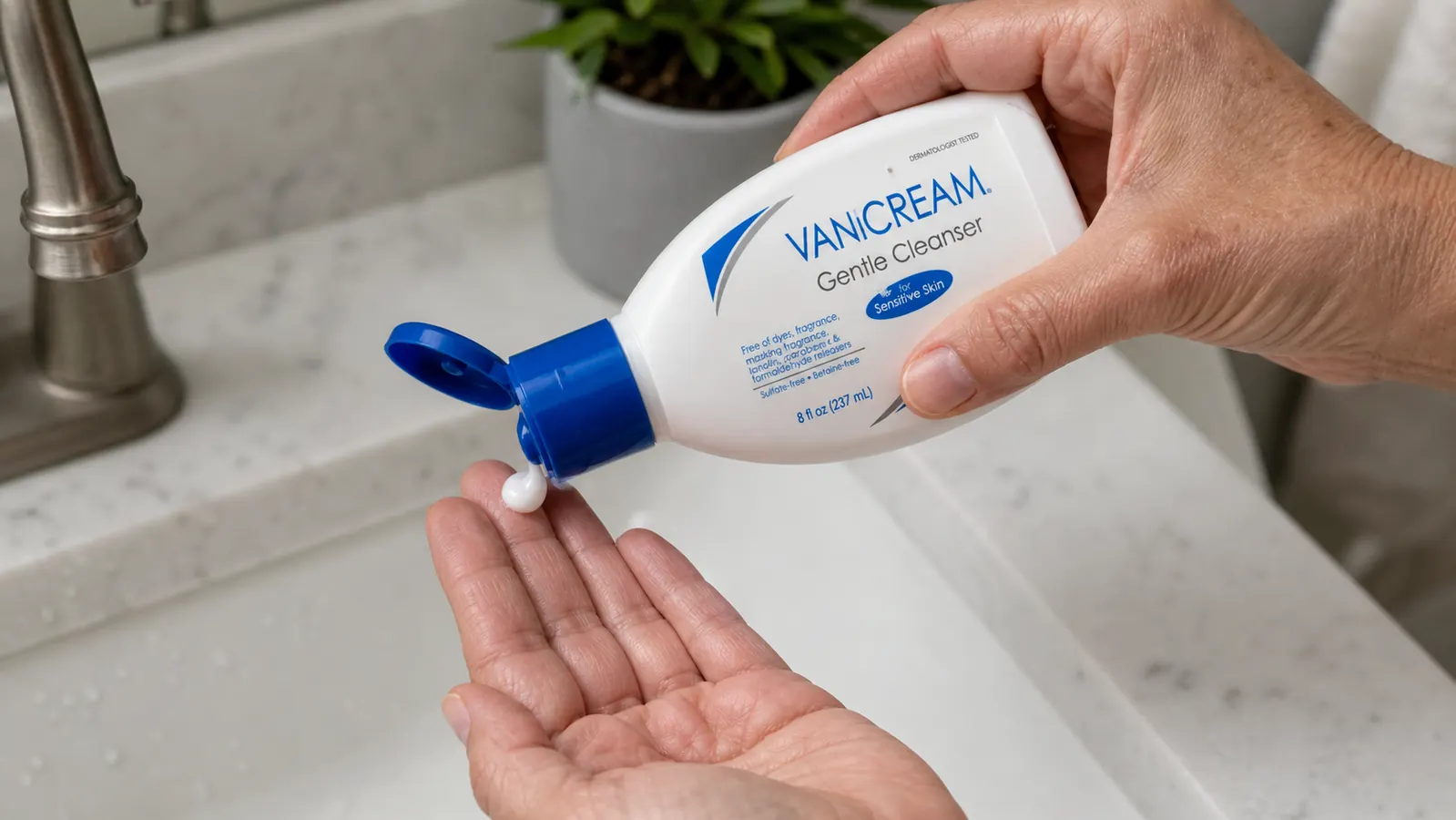
I used to think a longer ingredient list meant a more advanced, more effective product. In practice it mostly means more chances for something in that list to set your face off. The Vanicream cleanser is the one I landed on after cycling through half a dozen options over about two years, and the appeal is almost boring on paper. It's formulated without the common irritants that were causing my flare-ups, no fragrance, no dyes, no soap, nothing that reads like a chemistry experiment on the back label.
It doesn't foam up much, which threw me off the first time I used it. There's no thick lather to rinse away, just a light film that wipes clean with a splash of lukewarm water and a soft washcloth. My skin felt the same after washing as it did before I started, not tight, not stripped, not stinging at the edges of my nose the way some cleansers left me feeling. That non-reaction, that total absence of drama, is genuinely the whole point of a product like this.
At around 5 to 6 dollars for the Vanicream bottle at today's price, it's cheaper than half the drugstore cleansers I tried and skipped past on my way to it. I wish I'd started here instead of ending here, because it would have saved me a drawer full of half-used bottles and a lot of unnecessary irritation along the way. It's also small enough to toss in a carry-on, which matters more than I expected once I started traveling with it instead of raiding hotel toiletries that always seemed to leave my face red by the second day.
Step 3: Pat, don't rub, and don't over-dry
Rubbing a towel briskly across reactive skin is one of those habits that feels completely normal until someone points out you don't actually need to do it that way. I switched to patting dry with a soft cotton towel, pressing gently instead of dragging the fabric across my cheeks, and leaving my face slightly damp instead of scrubbing it bone dry the way I used to.
The damp skin matters for the next step. Moisturizer goes on smoother and stays put longer when the skin underneath isn't parched and pulled tight. I noticed less flaking around my nose and chin within about two weeks of making this one small change, and it cost nothing except a slight adjustment to a habit I'd had since childhood.
I also keep a separate hand towel just for my face now, hung on its own hook away from the shower. It sounds excessive until you think about what a shared bath towel actually touches during the week, hands, hair, whatever else, before it ever gets near your face again. I swap mine out every two to three days, more often in summer when everyone's showering twice a day.
Step 4: Moisturize within two minutes, not two hours
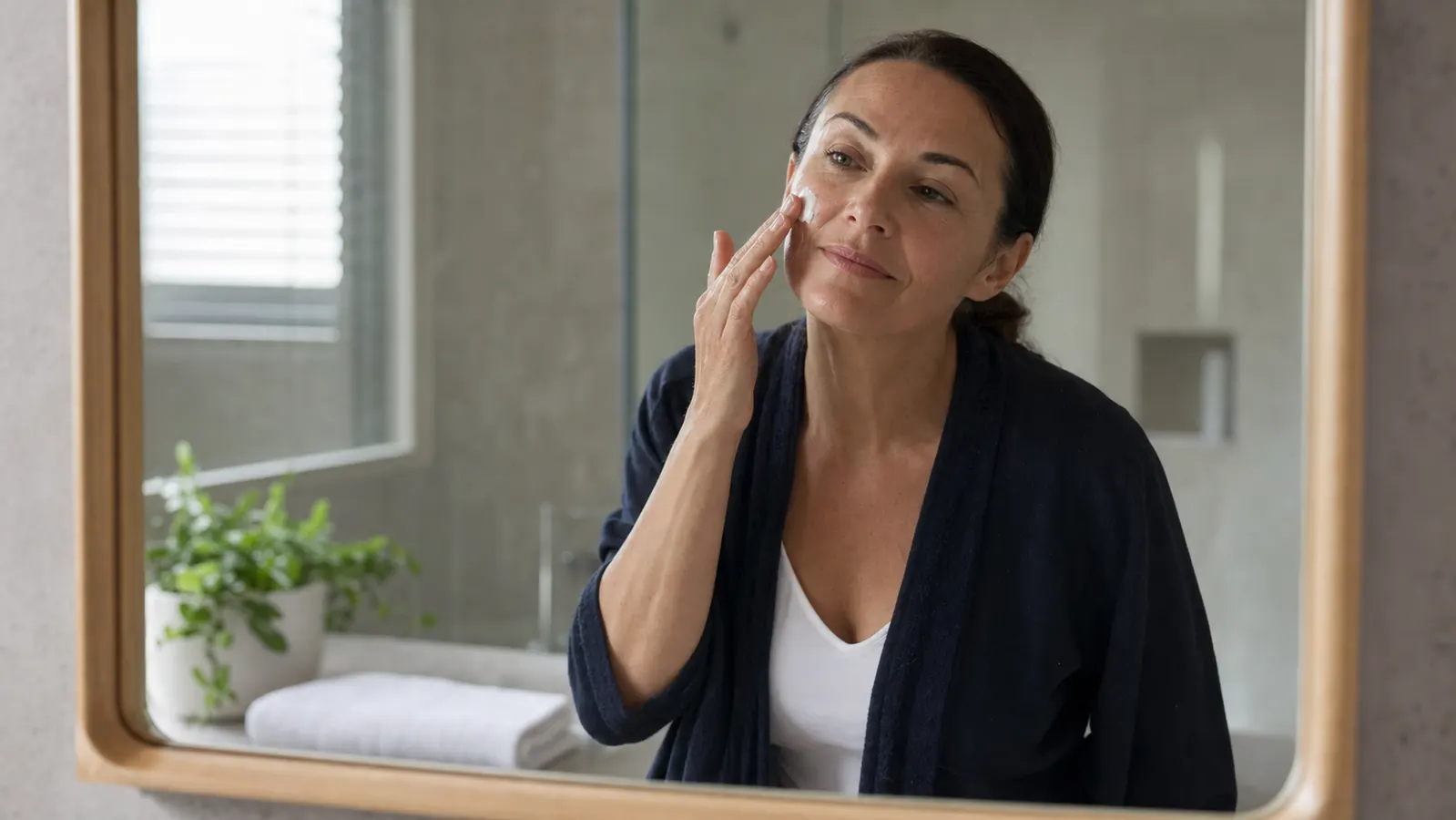
I used to wash my face, wander off to make coffee, answer a text, and moisturize twenty or thirty minutes later once I remembered. That gap was quietly costing me. Applying moisturizer while the skin is still a little damp locks in more comfort and softness than applying the same product to fully dry skin later in the morning.
I keep my moisturizer sitting out on the bathroom counter now instead of tucked away in a drawer, purely so I don't have an excuse to skip the step or push it back. A fragrance-free, simple formula works best here too, following the same logic as the cleanser. Layer the lightest products first, the heavier, richer ones second, and give each one a moment to sink in before adding the next.
If you wear sunscreen during the day, which you should regardless of your skin type, give the moisturizer roughly a minute to settle before layering sunscreen on top of it. Rushing that step is how you end up with pilling, those little rolled-up beads of product that make your foundation look patchy and uneven by noon, no matter how good the products underneath actually are.
Step 5: Track your face for two weeks before judging anything
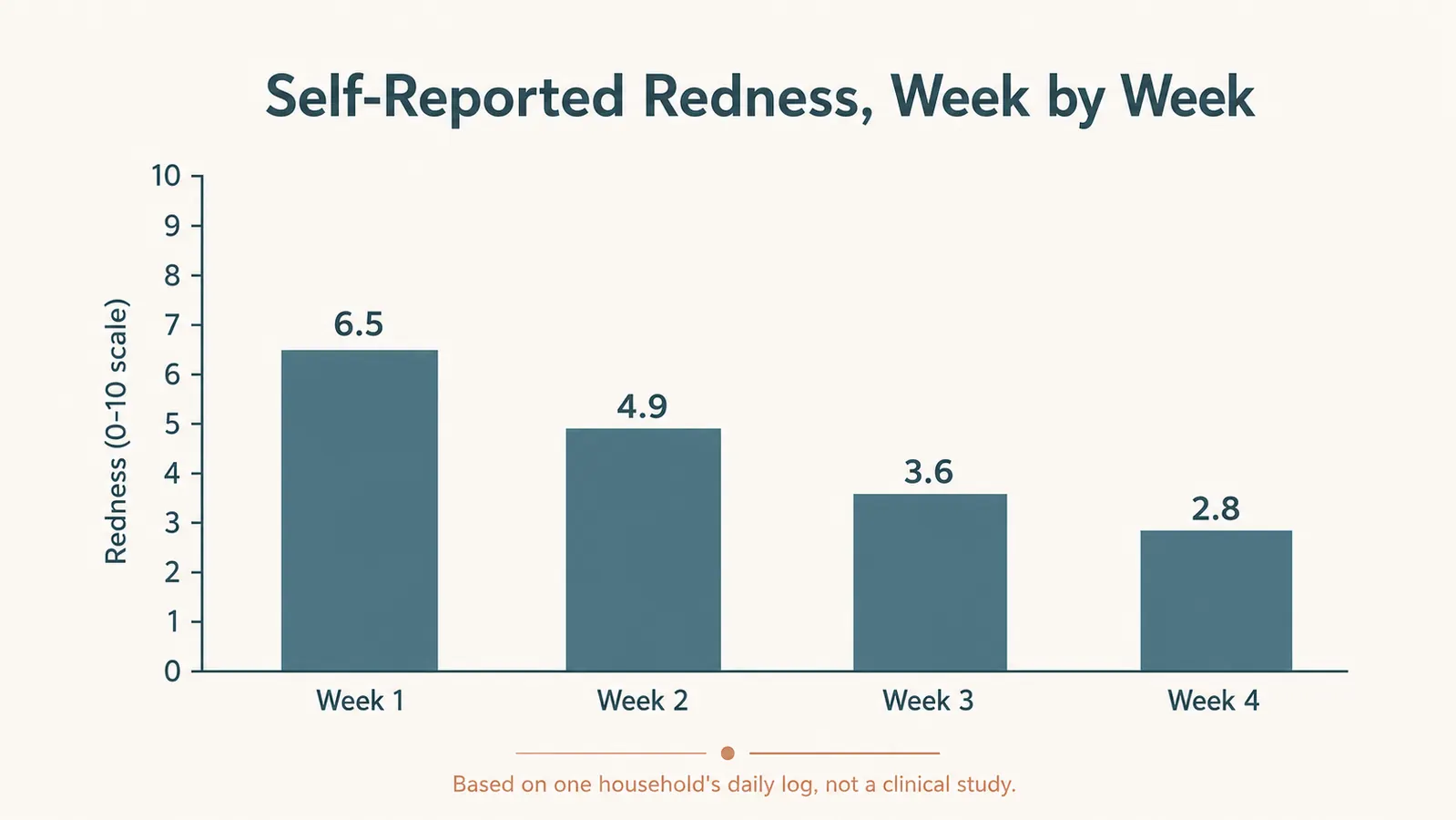
The mistake I made over and over again was giving a new product three or four days, seeing no dramatic overnight change, and moving on to something else. Reactive skin doesn't work that fast in either direction, good or bad. I started keeping a simple log on my phone, just a number from 1 to 10 for how red or tight my face felt each morning, jotted down before I even looked in the mirror properly. It took a full two weeks before I trusted any pattern in the numbers.
The chart below is my actual log from the month I switched over to this routine. Nothing scientific about it, no lab, no dermatologist involved in collecting it, just one household, one face, written down as honestly as I could manage on the mornings I remembered. What stands out to me looking back isn't the total drop, it's how slow week one and week two were compared to how much faster things improved after that. Consistency seemed to compound rather than build in a straight line.
What Else Helps
A few things outside the five steps made a real difference too, and none of them cost much. Sleeping on a clean pillowcase, swapped twice a week instead of once every two weeks, cut down on overnight irritation more than I expected it to. Switching my laundry detergent to a fragrance-free version helped almost as much as any skincare change did, since my pillowcase touches my face for eight hours a night, longer than any product I apply on purpose.
I also stopped layering more than three products at once, which used to be my default whenever a new serum or treatment caught my eye at the store. If something new goes on my face, something else comes off the rotation until I know how my skin actually handles it. That rule alone eliminated most of the guessing game about what was causing a new flare-up, because I was only ever changing one variable at a time instead of three or four.
If you're building out the rest of a gentle routine, a mineral sunscreen matters just as much as the cleanser does, since sun exposure tends to aggravate reactive skin and undo a lot of the calming work you've put in elsewhere. I cover what I use for that separately, but the short version is the same philosophy running through this whole routine: short ingredient list, no fragrance, patience over speed, and no product that promises an overnight miracle.
My face stopped being the thing I thought about first every morning. That's the actual win, not a dramatic before-and-after photo.
If you want the fuller list of why a gentle cleanser specifically matters for reactive skin, I laid out the reasoning in more detail in this rundown of gentle cleanser benefits. It's the piece I'd hand to a skeptical friend who doubts that swapping a five-dollar bottle could matter this much for how their skin looks and feels day to day.
None of this routine happened overnight for me, and I don't expect it to happen overnight for anyone reading this either. What changed my mind about all of it was simply sticking with the boring version for longer than felt natural, tracking it honestly, and resisting the urge to add something new every time I got impatient. That patience is the least glamorous piece of advice in this whole article, and it's also the one that actually mattered, more than any single product ever did on its own.
Start with the step that actually moved the needle for me
Of everything in this routine, swapping in the Vanicream cleanser is the change that made the biggest visible difference the fastest. It's a low-cost, low-risk place to start if your face reacts to almost everything else you've tried before it.
Amazon Check Today's Price on Amazon →