

I bought my first jar of Neutrogena Rapid Wrinkle Repair Retinol Face Moisturizer at a CVS on a Tuesday night in February, standing under fluorescent lights because I'd just seen a photo from my niece's wedding and did not love what forty years of squinting had done to the space between my eyebrows. I'm 54, I've never been much of a skincare person past sunscreen and a decent day cream, and I picked the affordable jar mostly because it wasn't the premium serum sitting next to it on the shelf. If it did nothing, I figured I hadn't lost much. If it did something, great.
Six months later, that same jar, well, my third jar by now, is still sitting on my bathroom counter, and if you know me that's the real review right there. I've bought plenty of creams and serums that made it two weeks before getting shoved in a drawer behind the hand lotion. This one didn't. What follows is what actually happened to my forehead lines, my texture, and my patience, night by night, over six months of nightly use, not the copy on the box.
The Quick Verdict
A drugstore retinol that earned its spot on my counter, but the first three weeks test your patience before you see anything worth testing.
Amazon Check Today's Price →Tired of Expensive Serums That Do Less Than This Affordable Jar?
Here's the exact tube I've gone through three of since February, at today's price.
Amazon Check Today's Price on Amazon →How I've Used It
My routine hasn't been complicated. I wash my face, pat it dry, wait about ten minutes so my skin isn't damp (damp skin makes retinol sting more, I learned that the hard way), then smooth on a pea-sized amount across my forehead, cheeks, and chin, avoiding right under my eyes and the corners of my mouth. Some nights I mix in a few drops of plain moisturizer if my skin feels tight. That's it. No seven-step routine, no toner, no essence.
I didn't start nightly on day one. The jar's own instructions warned me not to, and I'm glad I listened. I did every third night for the first two weeks, then every other night through week four, and only went fully nightly in month two once my skin stopped acting like I'd insulted it. That slow ramp-up is, in my opinion, the single biggest reason this jar is still on my counter instead of in a landfill with the products that made me quit in week one.
Every single morning after, without exception, I wear sunscreen. Retinol makes skin more sensitive to sun, and skipping that step undoes a lot of the good the nighttime routine is doing. If sunscreen isn't already a habit for you, honestly, get that locked in first before you add a retinol on top of it.
One jar has lasted me a little over eight weeks using a pea-sized amount nightly, which put my real cost somewhere around three dollars a week once I did the math on the back of a grocery receipt. That's the number that made it easy to keep buying without a second thought, even on months when I was also restocking sunscreen and a cleanser.
What's Actually in That Jar
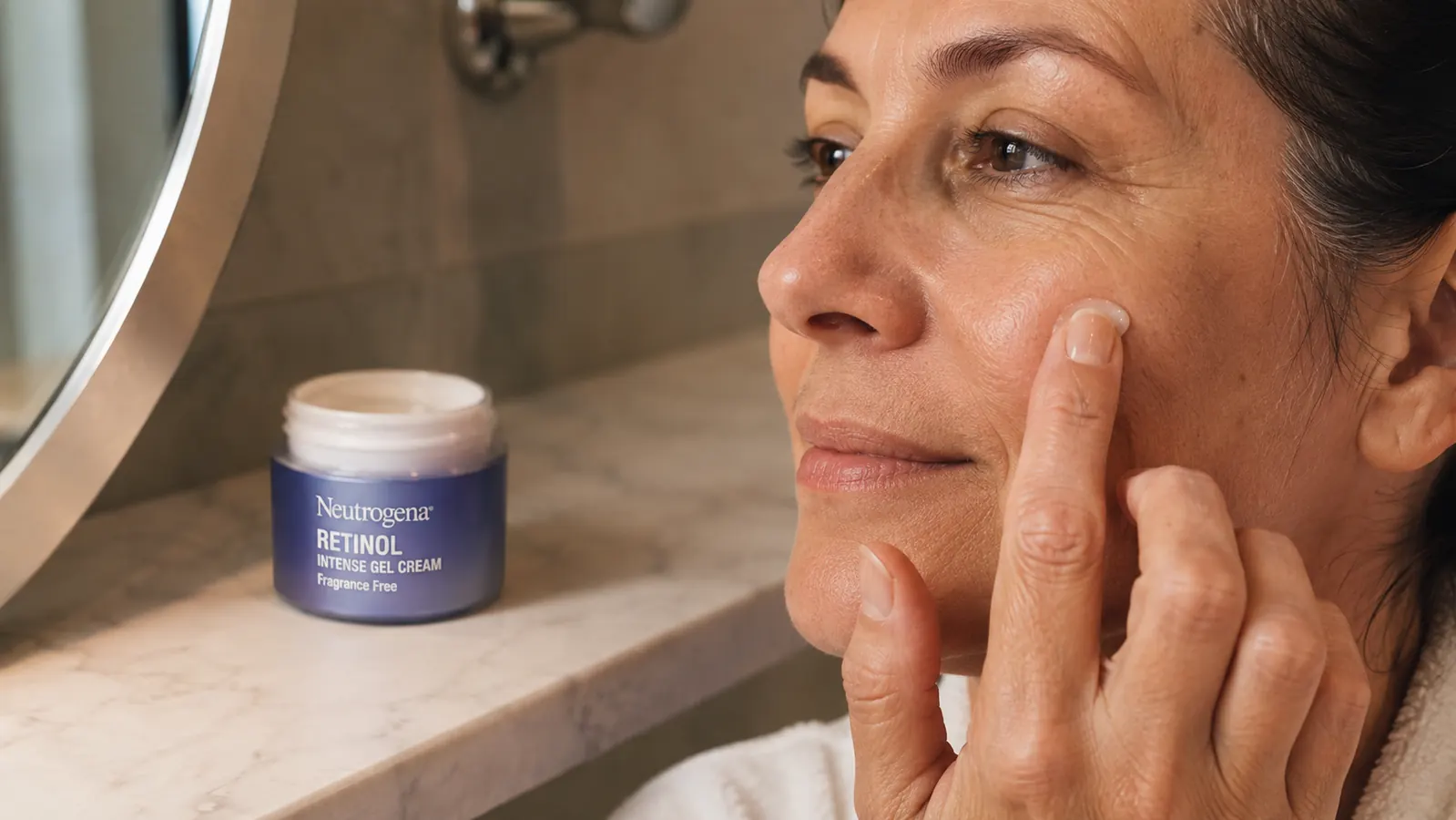
Neutrogena calls the ingredient in this formula accelerated retinol SA, which is retinol wrapped in a delivery system meant to release more slowly into skin instead of dumping all at once, the idea being less initial irritation for the same overall exposure over time. The formula also carries hyaluronic acid, which is doing the moisture side of the job so the retinol doesn't leave skin feeling papery. There's glycerin in there too, and the whole thing goes on more like a light gel-cream than a heavy night cream, which I appreciated since I run warm at night even with the ceiling fan on.
Texture-wise it's a cool, almost gel-like cream that sinks in within a couple of minutes and doesn't leave a film. There's a faint clinical smell, not unpleasant, but noticeable for the first thirty seconds, then it's gone. It layers fine under a heavier moisturizer on nights my skin needs it, though most nights I don't bother. If you want the fuller picture of why a retinol moisturizer helps with the appearance of fine lines in the first place, this is a reasonably textbook version of that idea in drugstore packaging.
I checked the full ingredient list against a couple of pricier serums out of curiosity, and the overlap was bigger than I expected. What you're mostly paying extra for with the boutique stuff, at least from what I could tell, is packaging and marketing rather than a wildly different active ingredient. That doesn't mean the pricier options are bad, just that this jar isn't cutting the corners I assumed a budget product would.
The First Three Weeks Were Rough
I won't sugarcoat the start. Days four through eleven were the worst of it, some flaking along my nasolabial folds and a couple of mornings where my skin looked pink and felt tight, like I'd spent too long in the wind. I almost quit on day nine. What kept me going was that the irritation was mild compared to a tretinoin prescription a friend had described to me, and it was clearly calming down by the start of week three rather than getting worse.
I leaned on a bland moisturizer on the off nights, skipped any exfoliating scrub entirely during that stretch, and stopped using my vitamin C serum in the morning until the flaking settled, since layering actives on top of a new retinol is asking for trouble. By day twenty-one the flaking was gone and my skin had adjusted to the point where I stopped thinking about it every time I washed my face.
My husband actually noticed before I did, he mentioned around day six that my cheek looked a little raw, which is how I knew it wasn't just in my head. I texted a friend who's used retinol for years and she talked me through backing off to every third night instead of stopping altogether, which turned out to be the right call. Having someone to check in with during that stretch made a real difference in whether I stuck with it.
Month two was uneventful in the best way. No new irritation, and I started applying nightly instead of every other night around week six. That's also roughly when I noticed my skin looked less dull in the mirror in the mornings, not dramatically, just enough that a coworker asked if I'd changed something in my routine before I'd said a word about it.
Months Three Through Six
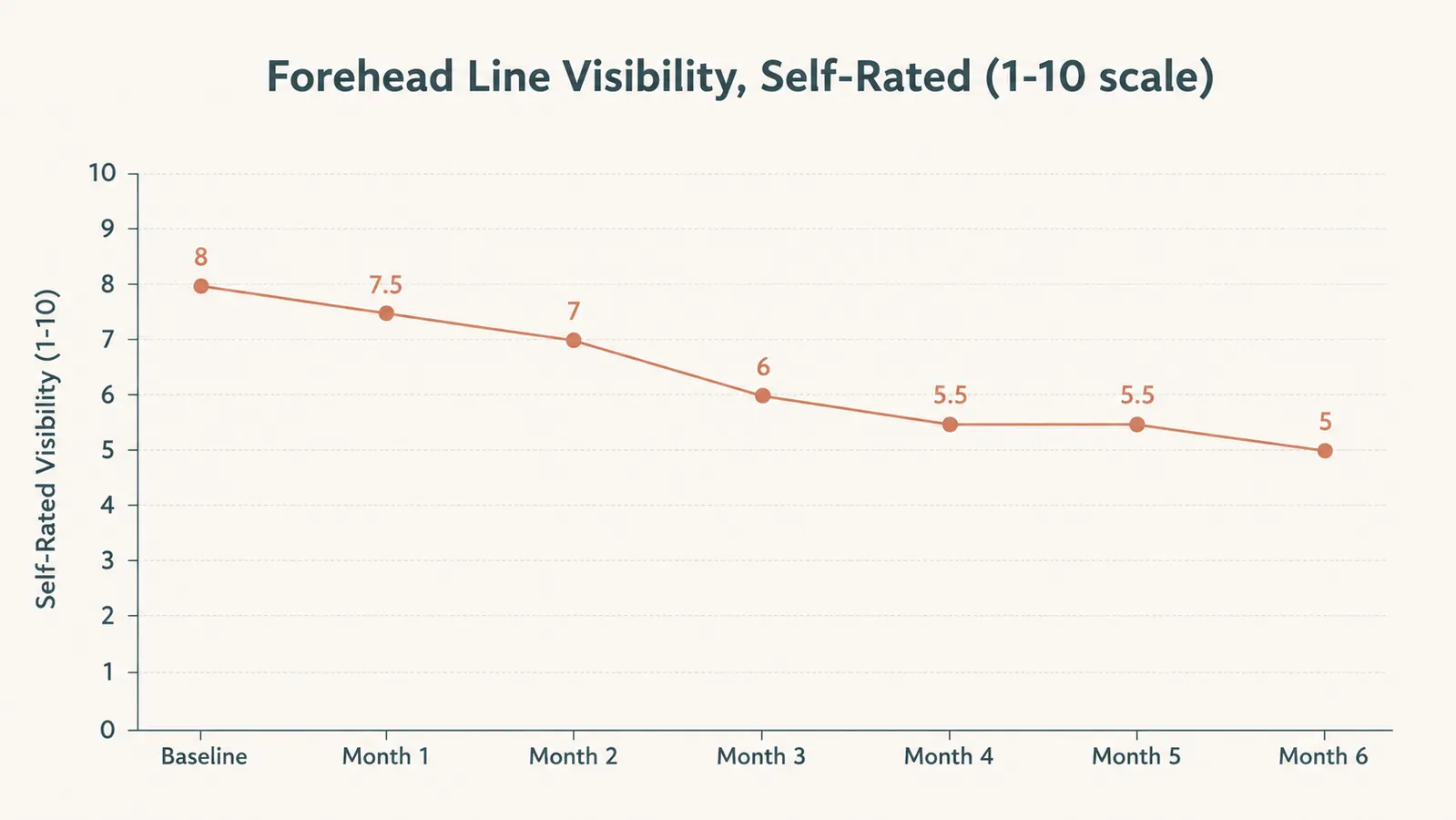
I started rating my forehead lines on a simple ten-point scale every few weeks, ten being most visible, mostly because I didn't trust my own memory to be honest with me. I was at an eight when I started in February. By the end of month three I'd dropped to a six. By month six, sitting here in early August, I'd call it a five, maybe a five and a half on a tired day. That's not a dramatic transformation and nobody should expect one from a budget jar, but the fine lines at the outer corners of my eyes look softer in a way my regular photos actually show.
I never used it directly under my eyes, that skin's too thin for a general-purpose retinol in my experience, but the improvement in overall texture spread past just the lines. My pores on my cheeks look smaller in good light, and the overall tone evened out, less of that blotchy pink I used to get on one side of my face by afternoon. None of this happened fast. All of it happened slowly enough that I only noticed it comparing photos three months apart.
Around month four I started adding a plain niacinamide serum a few mornings a week, mostly for the tone evening rather than anything the retinol wasn't already doing at night. I mention it because I don't want to hand this jar credit that belongs partly to a second product, but the bulk of the change, the part that shows up on my forehead scale, happened before I ever touched the niacinamide, so I'm comfortable saying the retinol is doing the heavy lifting.
There was a specific moment in July that made me trust the six-month mark more than any number on my own scale. My sister, who I hadn't seen in about four months, took one look at me in her kitchen and asked if I'd had a facial before I'd said a word about the jar. I hadn't changed anything else, same cleanser, same sunscreen, same everything, just the nightly retinol that had quietly become part of a routine I didn't think about anymore. That kind of comment means more to me than my own mirror checks, because it came from someone who wasn't looking for a change and noticed one anyway.
What I Tried Before, and Why I Switched
Before this jar I'd tried a RoC retinol cream a friend recommended, and honestly the two aren't as different as the marketing wants you to believe, though I ended up sticking with the Neutrogena because the texture agreed with my skin better and it was easier to find restocked at my regular drugstore. I wrote up the ingredient and price differences in more detail in a side-by-side over at my Neutrogena versus RoC comparison if you're trying to choose between the two before you buy either one.
I also tried a premium retinol serum from a boutique skincare line for about six weeks last year, and it stung more, cost nearly three times as much, and gave me results I genuinely couldn't tell apart from what this jar delivered. That comparison alone is why this jar earned its spot on the counter instead of going back to the pricier option once it ran out.
What I Liked
- Gentle enough ramp-up schedule that most skin tolerates it once you go slow at the start
- Noticeable softening in the appearance of forehead and eye-corner lines by month three
- Lightweight gel-cream texture, no greasy film
- Price makes it easy to actually finish the jar instead of abandoning it half-used
- Widely available at any drugstore, no waiting on restocks from a niche brand
Where It Falls Short
- First two to three weeks can bring flaking and mild redness, especially for reactive skin
- Faint clinical scent bothers some people at first
- Not formulated for the delicate under-eye area
- Results take patience, this is not a two-week transformation
- Sun sensitivity means sunscreen becomes non-negotiable every single morning
By month six I stopped thinking of it as a wrinkle cream and started thinking of it as the thing I'd feel a little guilty skipping, the same way I'd feel guilty skipping the gym.
Who This Is For
This is for someone like me, mid-40s to mid-60s, who wants a first retinol that won't require a dermatologist's prescription or a three-figure budget, and who's willing to go slow for the first month instead of expecting overnight results. It's a solid pick if you've never used a retinol before and want to see whether the category even suits your skin before spending more on something stronger. If you already tolerate prescription tretinoin well, this will probably feel mild by comparison, and that's fine, it isn't trying to compete with a prescription. It's also a reasonable pick if you've been burned before by a retinol that irritated your skin too fast, since the slower delivery system gives you more room to ease in at your own pace.
Who Should Skip It
If your skin reacts to almost everything, including gentle cleansers, talk to a dermatologist before starting any retinol, including this one, rather than self-experimenting. Pregnant or nursing readers should skip retinol products entirely and ask their doctor what's safe instead. And if you're chasing a fast, dramatic change before an event in the next few weeks, this isn't going to deliver that. It's a slow build, not a quick fix, and going in expecting speed is the fastest way to quit before it's had a real chance to work. If a lower-maintenance product fits your patience better right now, a good moisturizer alone is a perfectly fine place to stay until you're ready to take on the adjustment period a retinol asks for.
Ready to See If Six Months Changes Your Mirror Too?
Here's the jar I'm still restocking, at today's price.
Amazon Check Today's Price on Amazon →