
If you've stood in the skincare aisle holding both bottles, trying to decide between Vanicream Gentle Facial Cleaner and Cetaphil Gentle Skin Cleanser, here's the short version: they solve the same problem in slightly different ways, and the one that's better for you depends less on which brand has more reviews and more on what your skin actually does when it's irritated. I've used both for months at a time, not back to back in a rushed comparison, but as my real daily cleanser during two different stretches of my 40s when my skin decided sensitive was the new normal.
Short answer if you're in a hurry: Vanicream wins on ingredient minimalism and how little it reacts with rosacea-prone, easily flushed skin. Cetaphil wins on price per ounce and the fact that you can grab it at nearly any grocery store at 9pm when you're out. Below is the full breakdown, including the actual numbers, so you can decide with your skin in mind instead of mine.
I'll say this up front because it colors everything below: I don't think either of these cleansers is a bad product. Both show up on nearly every dermatologist's list of cleansers to try when your skin is acting up, and both have been around long enough that they aren't chasing a trend. This isn't a hit piece on one to prop up the other, it's a real comparison between two products that are, on paper, trying to do the same job with slightly different priorities.
| Vanicream | Cetaphil | |
|---|---|---|
| Price as tested | Budget-friendly for 2.5 oz | Affordable for 16 oz |
| Texture | Thin, milky lotion, almost no lather | Slightly thicker lotion, can be tissued off without water |
| Fragrance | Fragrance-free | Fragrance-free (original formula) |
| Foaming | Very light foam when used with water | Virtually no foam, more of a wipe-and-rinse feel |
| Packaging | Flip-top squeeze bottle | Pump bottle on larger sizes |
| Where it's sold | Pharmacies, dermatology offices, online, occasional Target stock | Nearly every grocery store, drugstore, Walmart, and Amazon |
| Amazon reviews (as of publish) | 4.7 stars, 34,736 ratings | 4.7 stars, roughly 91,000 ratings |
| Best for | Eczema-prone or reactive skin that wants the shortest possible ingredient list | Normal-to-dry sensitive skin, first-timers, budget per ounce |
How I Actually Tested Both
I didn't test these side by side for two weeks and call it a comparison, because two weeks tells you almost nothing about a cleanser. I used Cetaphil as my daily cleanser for about four months during a period when my skin was mostly calm, just to get a real feel for the texture and how it performed under my usual routine of vitamin C serum in the morning and a retinoid at night. Then, during a flare that lasted most of a winter, I switched to Vanicream and stayed on it for six months, tracking how quickly the redness on my cheeks and around my nose settled down.
That's an imperfect comparison, admittedly, since the two stretches weren't happening to identical skin conditions. But it's also the most honest way to test a sensitive-skin cleanser, because the whole point of these products is how they behave when your skin is already unhappy, not how they feel on a good week. A cleanser that's fine on calm skin and disappointing on angry skin isn't actually doing its job.
I also paid attention to boring, practical things most reviews skip: how each one dispensed with wet hands at 6am, whether either left a residue that interfered with my sunscreen going on smoothly, and whether the bottle was still sitting on my counter three months in or had quietly migrated to the under-sink graveyard of products I gave up on. Both survived that test, which already puts them ahead of most things I've tried.
One caveat worth saying plainly: my skin isn't your skin, and 'sensitive' covers a lot of ground. Someone with diagnosed eczema, someone with mild rosacea, and someone who just gets a little tight and reactive after a hot shower are all technically 'sensitive skin' customers, and they don't always respond the same way to the same cleanser. Treat this comparison as a starting point, and if you're dealing with a diagnosed skin condition, it's worth checking with a dermatologist before you build a whole routine around either product.
What's Actually in the Bottle
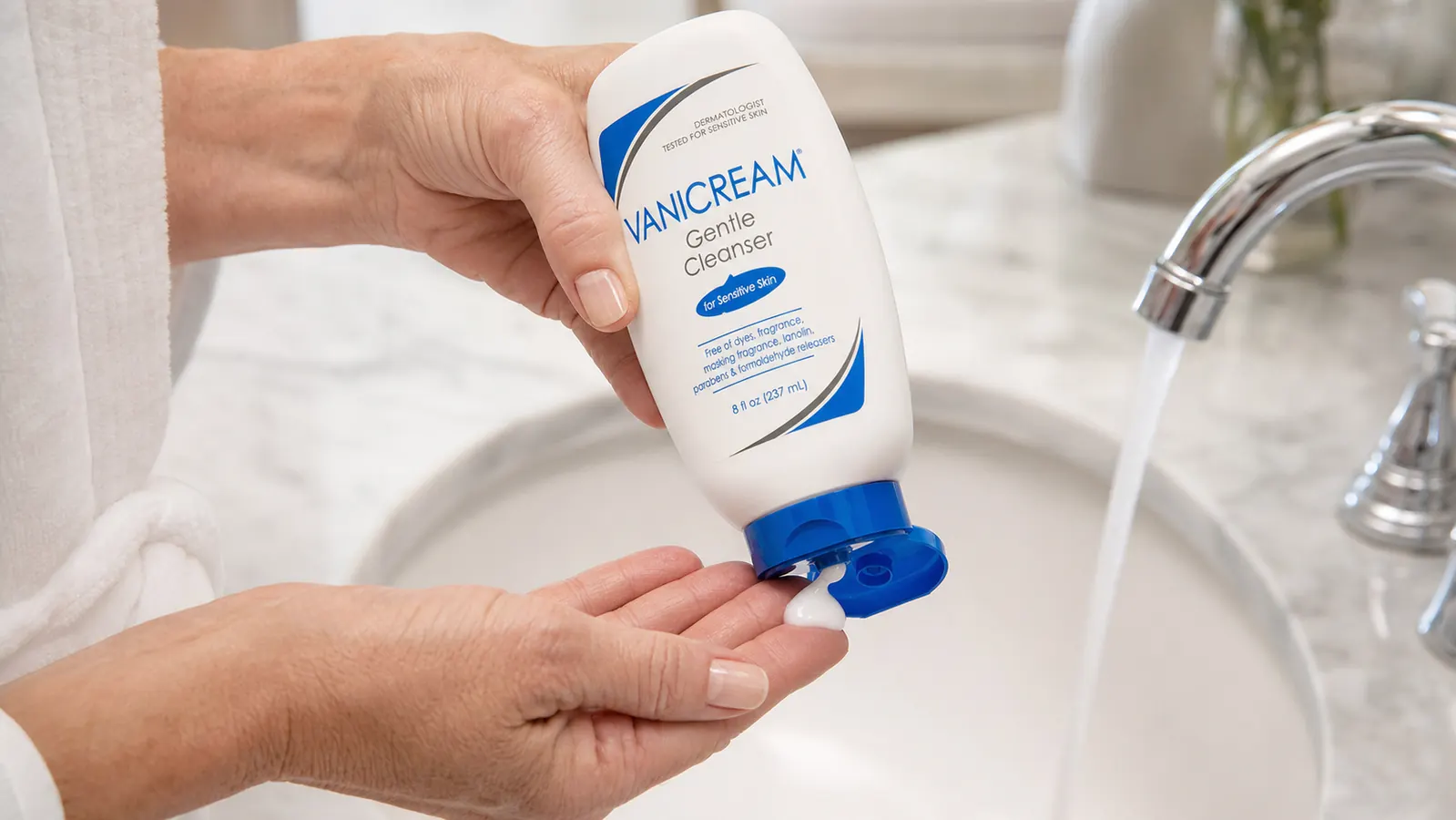
Both brands market themselves as 'formulated for sensitive skin,' which is a phrase that means almost nothing on its own, since it isn't a regulated claim. What separates them in practice is how short the ingredient list actually is once you flip the bottle over. Vanicream leans hard into leaving things out entirely, no fragrance, no dyes, no lanolin, no essential oils, none of the botanical extracts that sound nice on packaging but are exactly the kind of ingredient that makes my cheeks flush pink an hour after washing. Cetaphil's original formula is also fragrance-free and mild, but it's not built around the same 'remove everything nonessential' philosophy, it's built around being broadly tolerable for most people, which is a slightly different goal.
That difference showed up for me in a very specific way. When my skin was at its worst two winters ago, red and tight no matter what moisturizer I layered on top, switching to Vanicream was the first change that didn't make things visibly worse within a day. Cetaphil hadn't made things worse either, to be fair, but it also hadn't calmed anything down. I go into that whole stretch in more detail in my six-month log of using Vanicream morning and night, including the exact week things started to settle. For skin that isn't currently flaring, the ingredient difference between the two is probably academic. For skin that is flaring, it's the whole reason to pick one over the other.
Where Vanicream Wins
Vanicream's real advantage is that it gives you fewer variables to troubleshoot. When you're trying to figure out whether a breakout or a bout of redness is coming from your cleanser, your moisturizer, a new laundry detergent, or just the weather, a short ingredient list narrows the suspect pool fast. That's the quiet reason dermatologists hand out Vanicream samples so often, not because it's magic, but because it's boring in exactly the way you want a diagnostic tool to be boring.
It also rinses cleanly without stripping. That sounds minor until you've used a cleanser that leaves your skin feeling squeaky, which for reactive skin is usually a sign the barrier just got roughed up a little. Vanicream leaves a faint film for maybe thirty seconds, then rinses away completely, no residue, no tightness pulling at the corners of my eyes. Under sunscreen the next morning it doesn't pill or ball up, which matters more than people think, because any cleanser that leaves an oily film behind will fight with your SPF all day and leave you rubbing at little gray flecks by lunchtime.
The bottle itself is unglamorous, plain white plastic with a flip cap and no pump, and that's honestly part of the appeal. Nothing about it is trying to sell you a lifestyle. It's a cleanser that does one job and doesn't ask you to think about it, which is exactly what I want from a product that touches my face twice a day.
It also travels well, which mattered more than I expected. On a trip where I forgot my usual moisturizer and had to make do with whatever the hotel gift shop had, Vanicream was the one constant that kept my skin from getting worse while everything else in my routine was thrown off. A cleanser that behaves predictably even when the rest of your routine falls apart earns a certain kind of trust.

Where Cetaphil Wins
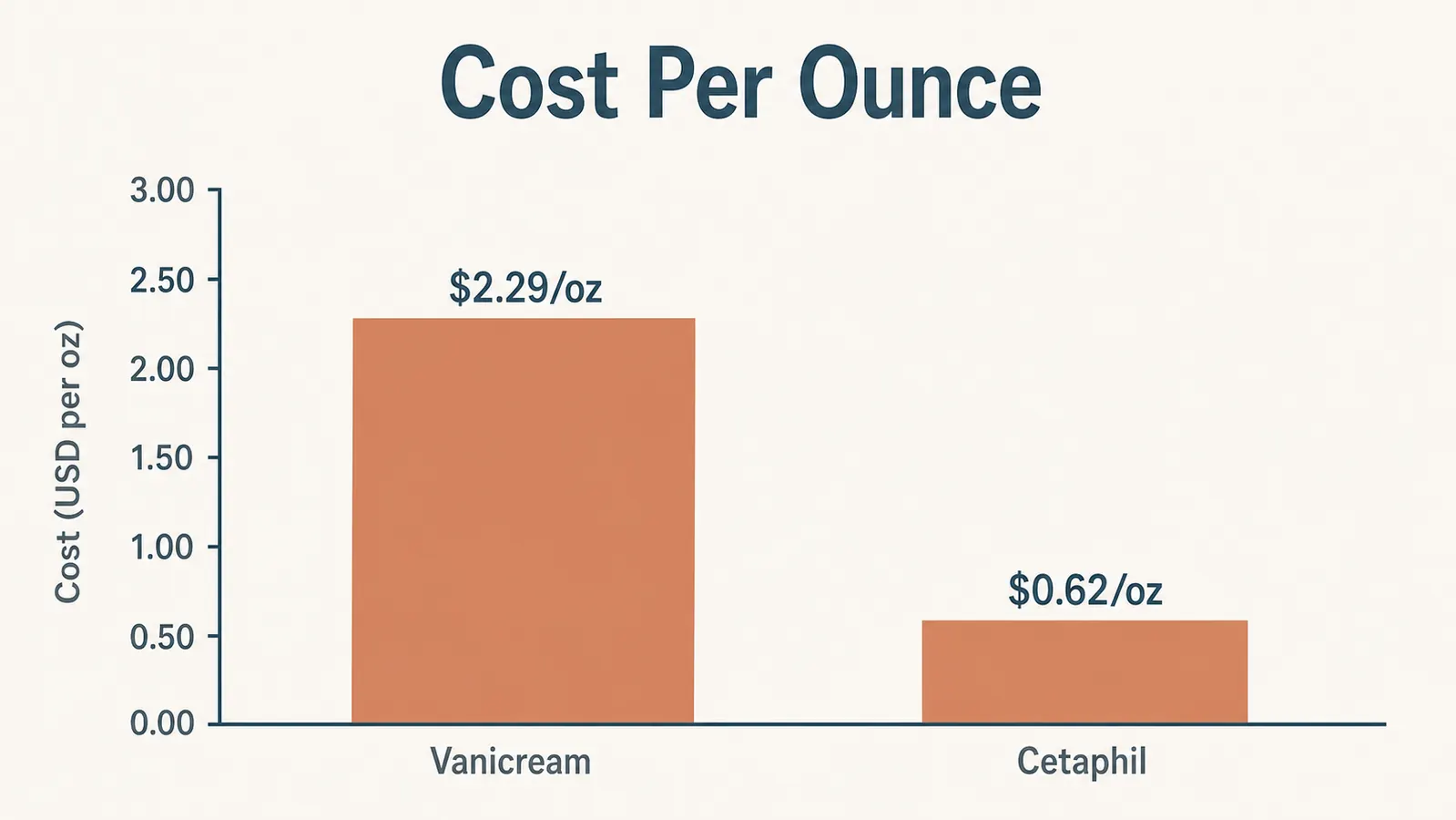
Cetaphil's real advantage is math, not chemistry. At roughly 62 cents an ounce against Vanicream's $2.29, you're paying nearly four times as much per ounce for the Vanicream bottle. If you're cleansing twice a day in a household with more than one person using the same bottle, that gap adds up over a year in a way that genuinely matters for a lot of budgets. Cetaphil also comes in a pump on the larger sizes, which sounds like a small detail until you're doing this half asleep at 6am and don't want to fumble a flip cap with wet, soapy hands.
The other real advantage is availability. Cetaphil is sold in nearly every grocery store, drugstore, and big box store in the country, so if you run out on a Tuesday night, you're not waiting on a pharmacy restock or a next-day delivery. For anyone new to sensitive-skin cleansers who isn't sure yet how committed they are to one specific brand, that convenience is worth something real. It's also just easier to recommend to a friend who wants to try something gentler without a special trip.
Texture-wise, Cetaphil is slightly thicker and more lotion-like than Vanicream's thinner, almost watery consistency, and some people genuinely prefer that. If your skin runs dry rather than reactive, meaning it gets tight and flaky more than it gets red and stinging, that little bit of extra richness can feel more comforting on contact, even though neither product is doing much moisturizing on its own. Cleansers rinse off, they don't stay on your skin long enough to be a real hydration source either way.
There's also something to be said for a product that's been a household staple for decades without needing to reinvent itself every few years. Cetaphil doesn't chase trends, and there's a version of comfort in that consistency, the same bottle your mother might have kept by the sink, doing the same unremarkable, reliable job it always has.
Tired of guessing which 'gentle' cleanser actually is one?
This is the one I keep coming back to when my skin is at its most reactive. Check today's price and see the current rating for yourself.
Amazon Check Today's Price on Amazon →Who Should Buy Which
If your skin has ever reacted to a 'gentle' product that still had fragrance or a long ingredient list buried on the back of the bottle, start with Vanicream. It costs more per ounce, but the shorter formula gives you fewer variables to troubleshoot if something still doesn't agree with you, and that clarity is worth the extra few dollars a bottle. If your skin is more dry-sensitive than reactive-sensitive, and price per ounce actually moves your decision, Cetaphil's slightly richer texture and lower cost make it the more practical daily driver. There's no shame in going with what's cheaper and sitting right there on the shelf at Target.
If you're not sure which camp you're in, here's the test I'd actually use. Wash your face with whatever you currently have, pat dry, and wait fifteen minutes without applying anything else. If your skin feels tight and a little flaky, you lean dry-sensitive and Cetaphil is a reasonable place to start. If it feels warm, a little itchy, or you can see faint pink patches that weren't there before you washed, you lean reactive-sensitive, and I'd spend the extra money on Vanicream first.
I'll be honest that neither cleanser is a fix for anything beyond basic gentle cleansing, they're both just very competent at not making things worse, which for sensitive skin is most of the battle most days. If you want my full, warts-and-all take on where Vanicream actually falls short, including the one thing about the bottle design that still mildly annoys me three months in, I wrote it all out separately in my honest review.
Ready to stop rotating cleansers hoping one finally sticks?
See Vanicream's current price and reviews on Amazon before you decide.
Amazon Check Today's Price on Amazon →