
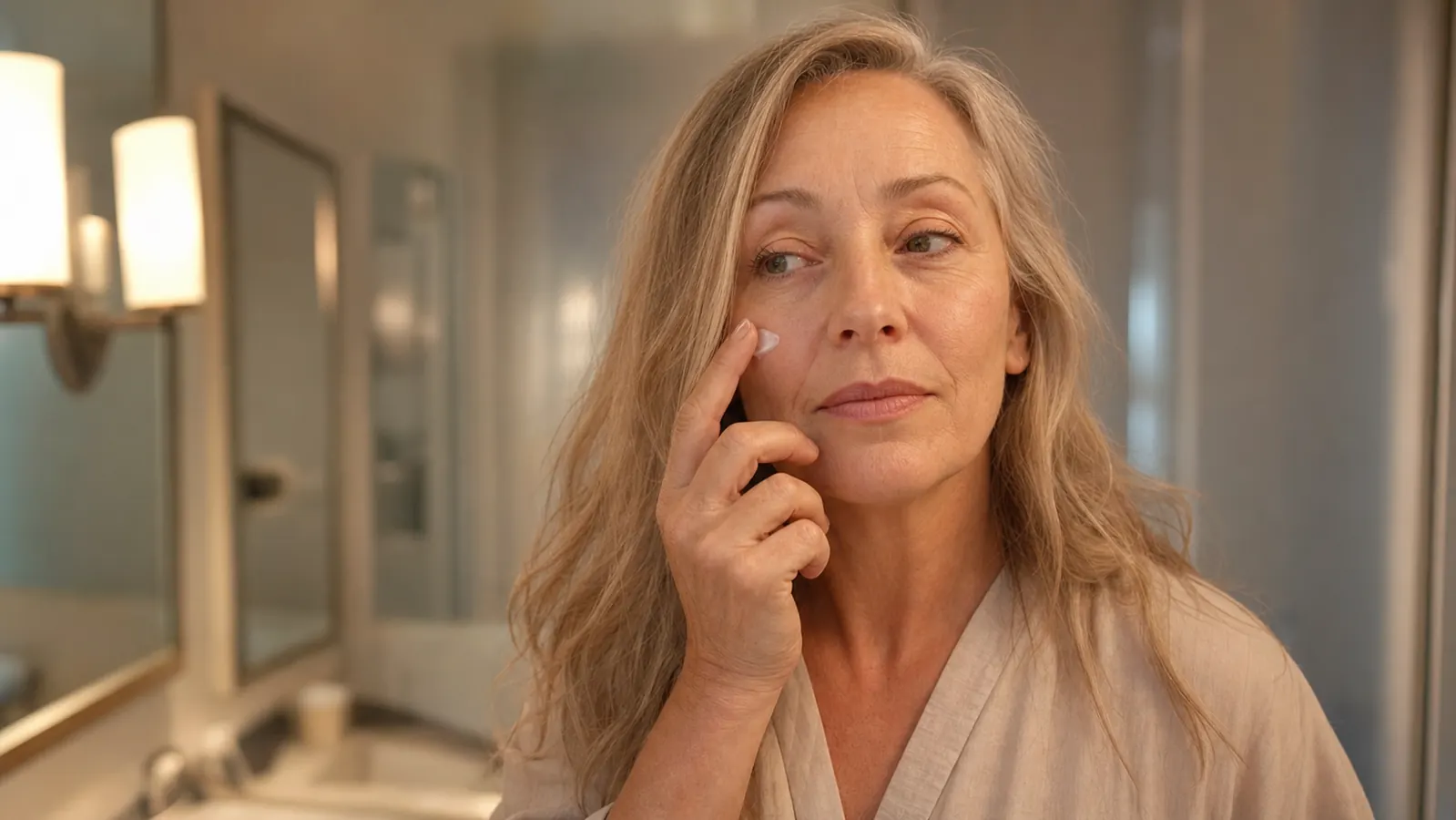
The first time I tried a retinol, I did what almost everyone does wrong. I slathered it on every single night starting day one, like my whole face needed the maximum dose immediately. Four days later my cheeks were flaking in visible sheets and I looked worse than before I'd started, not better. It took a second attempt, a much slower one, before a retinol actually gave me the softer lines and evened texture I was chasing instead of a rash I had to explain at work.
This is the routine I'd hand a friend who's starting from zero. It's built around a jar of Neutrogena Rapid Wrinkle Repair Retinol Face Moisturizer, priced affordably, mild enough for a first-timer but strong enough to change what you see in the mirror if you give it these five steps instead of rushing them. None of this is about treating a diagnosed skin condition. It's about the appearance of fine lines and texture, and if you have a skin condition, are pregnant, or are nursing, talk to a dermatologist before adding any retinol to your routine.
Start With the Jar That's Built for a Slow, Gentle Ramp-Up
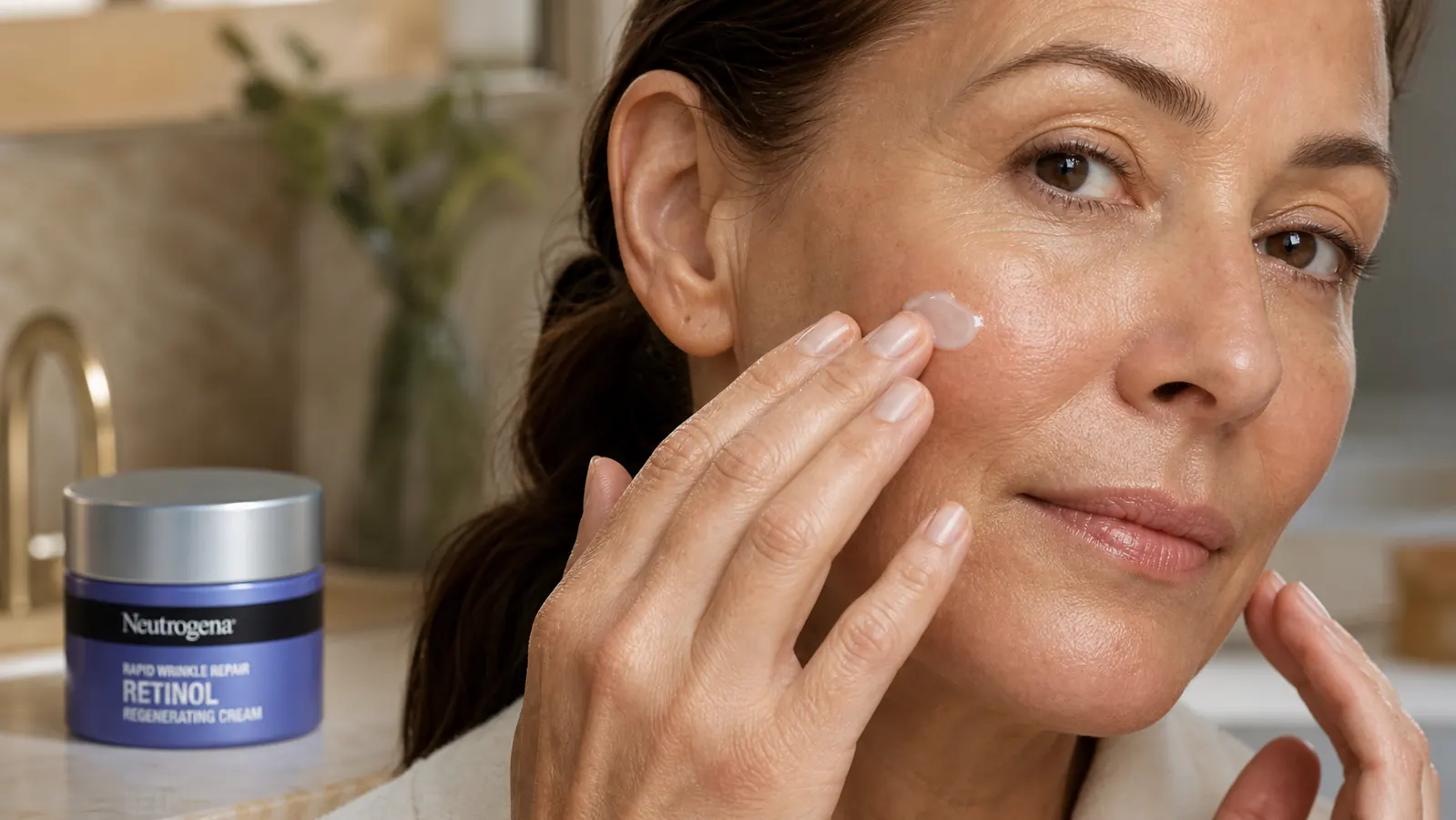
This is the Neutrogena retinol moisturizer the five steps below are built around, mild enough to introduce gradually without wrecking your skin barrier in week one.
Amazon Check Today's Price on Amazon →Step 1: Patch Test Before You Touch Your Whole Face
Skip your whole face on night one. Dab a small amount, about the size of a grain of rice, along your jawline or behind your ear, somewhere you can see it but that isn't the center of your face if it goes wrong. Leave it on overnight and check it the next morning, then repeat for two more nights before you decide it's safe to move to a full application.
You're watching for anything beyond mild, short-lived tingling. Real redness that doesn't fade by morning, swelling, or itching that gets worse instead of better over those three nights means this particular product, or maybe retinol in general at this strength, isn't a good match for your skin right now. That's useful information before you've committed a whole jar and a month of your patience to it.
A normal reaction looks like a faint warm feeling for a minute or two after applying, gone by the time you're done brushing your teeth. That's your skin adjusting, not rejecting the product. What you don't want is anything that's still visible when you wake up. If the patch looks exactly the same as the untouched skin next to it after three nights, you're clear to move on to Step 2.
This step feels slow when you're excited to start, and I get skipping it. I skipped it myself the first time, which is exactly why I'm telling you not to. Three nights of patience on a small patch of jaw skin is a much smaller price than a week of a red, peeling face you can't cover with makeup.
Step 2: Start at Two Nights a Week, Not Seven
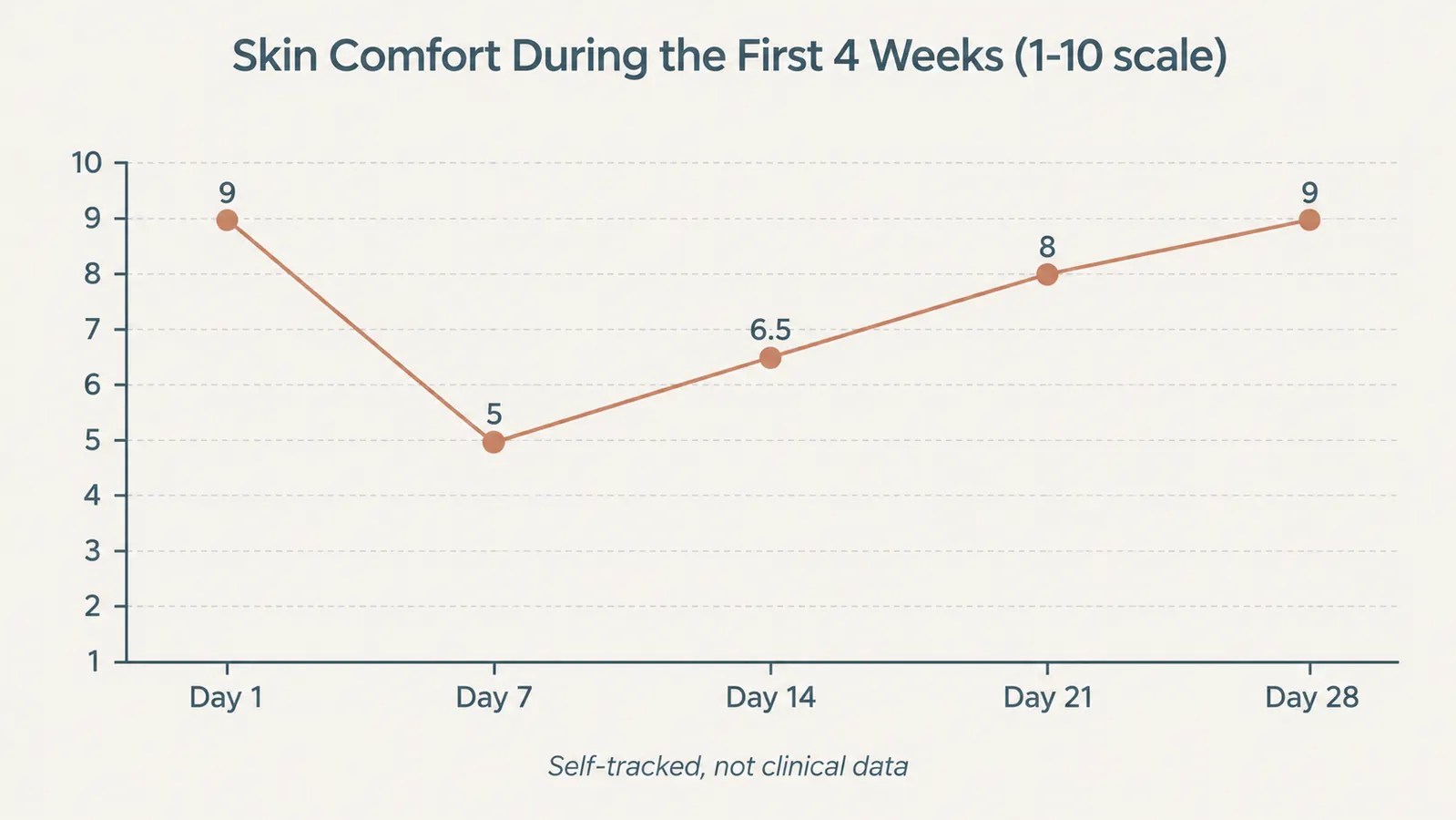
Once your patch test clears, don't jump straight to nightly. Apply two nights a week, with at least a day of nothing but a plain moisturizer in between, for your first two weeks. That gap gives your skin's barrier time to adjust to the increased cell turnover instead of getting hit with it every single night before it's ready.
Move to every other night for weeks three and four if those first two weeks went smoothly, meaning no more than mild, short-lived dryness. Only go fully nightly starting in month two, once your skin has stopped reacting at all to the every-other-night schedule. My neighbor Paulette, who's 59 and started this same jar last spring, went three full weeks on the every-other-night schedule before her skin tolerated nightly use, and she still says that patience is the only reason she didn't quit.
Write your schedule on a sticky note if you have to. It sounds unnecessary until week two, when it's tempting to add a night early because your skin feels fine and you're impatient for results. The schedule exists precisely for the days you feel fine, since irritation often shows up twelve to twenty-four hours later, not immediately after you apply it.
There's no prize for getting to nightly faster. Retinol is a months-long habit, not a two-week sprint, and the schedule that gets you to month six still using it beats the aggressive one that gets you to week two with a jar shoved in a drawer.
Step 3: Choose One Retinol Moisturizer and Commit to the Jar
This is the step where the actual product matters, and it's the only step where I'm going to point you toward a specific one. Neutrogena Rapid Wrinkle Repair uses an ingredient the brand calls accelerated retinol SA, which is retinol built into a delivery system meant to release more gradually into skin instead of dumping its full strength at once. Paired with hyaluronic acid for hydration, the formula goes on more like a light gel-cream than a heavy night cream, which matters if your skin runs warm or oily and heavier creams have made you quit retinol before.
Picking one product and sticking with it matters more than picking the theoretically strongest one. Jumping between three different retinol serums in three months because none of them felt like they were working fast enough is the single most common way people waste money on this category. Give one jar the full ramp-up schedule from Step 2 before you decide whether it's working. I go through what a full six months on this exact jar looked like, irritation and all, in my long-term review, if you want the longer picture before you commit to a jar.
For 1.7 ounces, and lasting roughly two to three months of pea-sized nightly use once you're at full frequency, the Neutrogena is priced low enough that finishing the jar doesn't feel like a gamble, which is exactly the kind of low-stakes commitment that makes people actually stick with a new routine instead of second-guessing it. It also sits at a 4.4-star average across close to 35,000 reviews, which isn't a guarantee for your own skin, but it does mean plenty of other beginners have run the same experiment before you.
If you're comparing jars side by side in the drugstore aisle, look for a formula that pairs the retinol with a hydrating ingredient like hyaluronic acid rather than a bare retinol in an alcohol base. That pairing is a big part of why this one is tolerable enough to build a ramp-up schedule around in the first place, instead of one that fights you at every step.

Step 4: Apply It in the Right Order and the Right Amount
Wash your face, pat it dry, and then wait. Ten minutes, roughly. Damp skin absorbs retinol faster and stronger, which sounds like a good thing until you realize it also means more irritation, not more results. Applying to fully dry skin is one of the simplest, most overlooked ways to make a retinol easier to tolerate.
Use a pea-sized amount for your entire face, applied in small dots across your forehead, cheeks, and chin, then smoothed outward. That's genuinely enough to cover your whole face. More isn't more effective, it's just more irritation for the same eventual result. Avoid the delicate skin right under your eyes and the corners of your mouth, since a general-purpose retinol like this one isn't formulated for that thinner skin.
If your skin feels tight or dry on a given night even at your current frequency, mix a few drops of a plain, fragrance-free moisturizer into your palm with the retinol before applying, or apply the moisturizer first and the retinol over it. This buffering trick dilutes the retinol just slightly and can be the difference between a night your skin tolerates fine and one where you wake up tight and pink.
If your neck and the backs of your hands show the same fine lines and sun damage as your face, a thin layer there too is worth considering once you're fully adjusted, usually not before month two. Those areas tend to be a little more sensitive than facial skin, so treat them as a later addition rather than part of the original patch test.
Step 5: Protect Your Progress With Sunscreen Every Single Morning
Retinol makes skin more sensitive to sun, full stop, no exceptions for cloudy days or a five-minute walk to the mailbox. Skipping sunscreen the morning after a retinol application doesn't just risk a sunburn, it actively works against the fading you're trying to achieve in the appearance of your fine lines, since sun exposure is one of the biggest contributors to that visible aging in the first place.
Make this the one step you never skip, even before you've fully nailed down the rest of the routine. If sunscreen isn't already an automatic habit for you, honestly, get that locked in on its own before you add a retinol on top of it. The two are meant to work together, not one covering for the absence of the other.
A mineral sunscreen tends to sit better on top of retinol-treated skin than some heavier chemical formulas, since skin is already a little more reactive during the adjustment weeks. Whatever you reach for, the habit matters more than the specific brand. Every morning, no exceptions, for as long as you're using retinol at night, and reapply if you're outside for more than a couple of hours, the same way you'd reapply on any other day.
What Else Helps
Keep the rest of your routine boring while your skin adjusts. Skip exfoliating scrubs, vitamin C serums, and any other active ingredient for the first three to four weeks, since layering multiple actives on top of a new retinol is one of the fastest ways to end up with irritation you can't trace back to a single cause. A gentle, fragrance-free cleanser and a plain moisturizer on your off nights is genuinely enough support. Drink your water, sleep isn't optional, and don't underestimate how much a humidifier in a dry bedroom can take the edge off flaking during those first few weeks. If you want the fuller case for why this category works in the first place, including how the turnover process actually happens under the skin, I laid out ten reasons a retinol moisturizer helps with the appearance of fine lines that's worth a read before you start. And give it real time. Most people judge a retinol by week two, when the visible progress usually hasn't started yet. Judge it at week twelve instead, and you'll have a much fairer picture of whether it's working for you.
The routine that actually works isn't the strongest one. It's the slow one you're still doing three months from now.
Ready to Start the Slow Way, the Way That Actually Sticks?
This is the Neutrogena jar the five steps above are built around, mild enough to introduce gradually and strong enough to still be worth it by month three.
Amazon Check Today's Price on Amazon →