
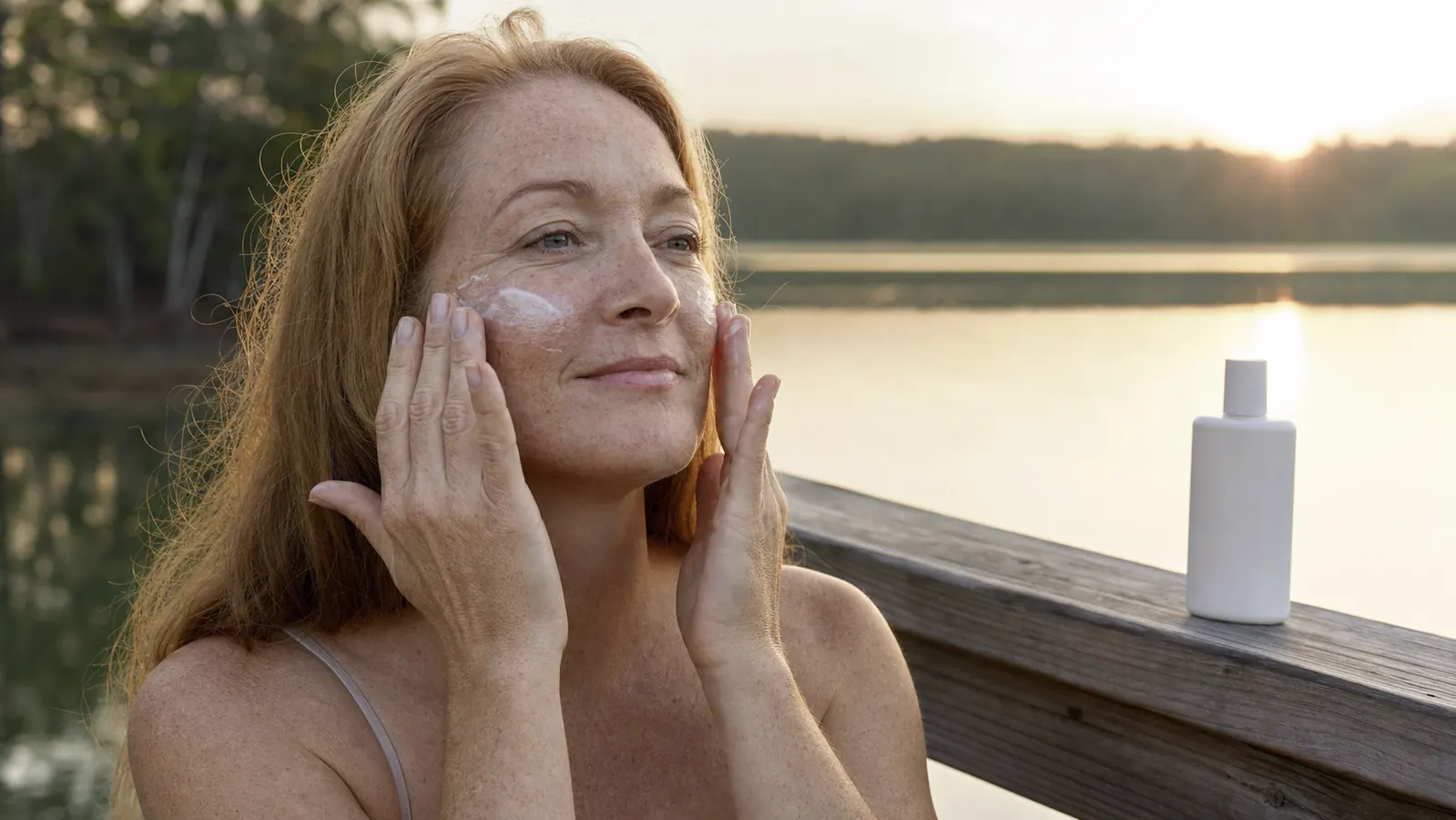
I started using La Roche-Posay Anthelios 50 Mineral Tinted Ultra Light Sunscreen Fluid the week before Memorial Day, mostly out of desperation. I'm 47, fair and freckled, the kind of skin that turns pink if I forget sunscreen on an overcast Tuesday, and I'd spent the better part of a decade watching two different chemical sunscreens leave a stinging, itchy rash across my cheeks every summer. My dermatologist mentioned that mineral formulas had gotten a lot less chalky in the last few years and suggested I give one another try. I bought the tinted fluid mostly because the reviews kept saying it didn't leave the ghostly white cast I remembered from mineral sunscreens a decade ago. Four months later, through lake weekends, garden weeding, and 7am dog walks with my dog Biscuit before the heat set in, that same bottle is still sitting by my front door.
I want to be honest about what this review actually is. I'm not a dermatologist, I didn't run any lab testing, and nobody at La Roche-Posay sent me a free bottle in exchange for a glowing writeup. I'm a woman with reactive, sun-sensitive skin who wore this sunscreen almost every day for a full summer and kept notes on what happened, including the parts that annoyed me. If you want a miracle story, this isn't it. If you want to know whether a tinted mineral sunscreen can survive a real, sweaty, sunscreen-melting season without irritating reactive skin, keep reading.
The Quick Verdict
A genuinely lightweight mineral sunscreen with a tint that blends in rather than sitting on top, comfortable enough that I never once skipped a day, though it takes real practice to apply the right amount and it runs out faster than a typical drugstore lotion.
Amazon Check Today's Price →Still Avoiding Sunscreen Because of the White Cast?
I burned through three different mineral sunscreens before this one finally disappeared into my skin instead of sitting on top of it. See today's price on the exact La Roche-Posay bottle that's been on my counter since May.
Amazon Check Today's Price on Amazon →How I've Used It
My routine is the same one my dermatologist walks every patient through, and I finally started following it correctly once I actually cared about getting the coverage right. Every morning after moisturizer and before makeup, I use about two finger-lengths of fluid, one line down my index finger and one down my middle finger, spread across my face and neck. That's more than most people actually apply, and it's more than I ever used to apply with any sunscreen before this one, but it's what gets you close to the SPF number printed on the label. I let it sit for a minute before touching my face again, then move on to concealer and the rest of my makeup.
The first week was mostly an adjustment in technique, not tolerance. My skin never stung or flushed, not once, which was new for me after years of chemical sunscreens leaving a hot, itchy feeling within minutes. What took getting used to was the tint. On day one I applied too little and too unevenly, and I could see faint streaking along my jawline in bright bathroom light. By the end of week one I'd figured out the right amount and the right blending motion, working outward from the center of my face in short strokes rather than rubbing it in circles, and the streaking disappeared.
By midday, especially on lake weekends or long garden afternoons, I reapply over makeup using a separate mineral powder version I keep in my bag, since a full second layer of fluid isn't practical over foundation. On days I'm not wearing makeup, like weekend mornings walking Biscuit or working in the yard, I just reapply the same fluid directly, usually around the two-hour mark if I've been sweating or swimming. That reapplication habit, more than the sunscreen itself, is probably the biggest reason my skin held up as well as it did all summer.
The Tint, the Texture, and the White Cast Question
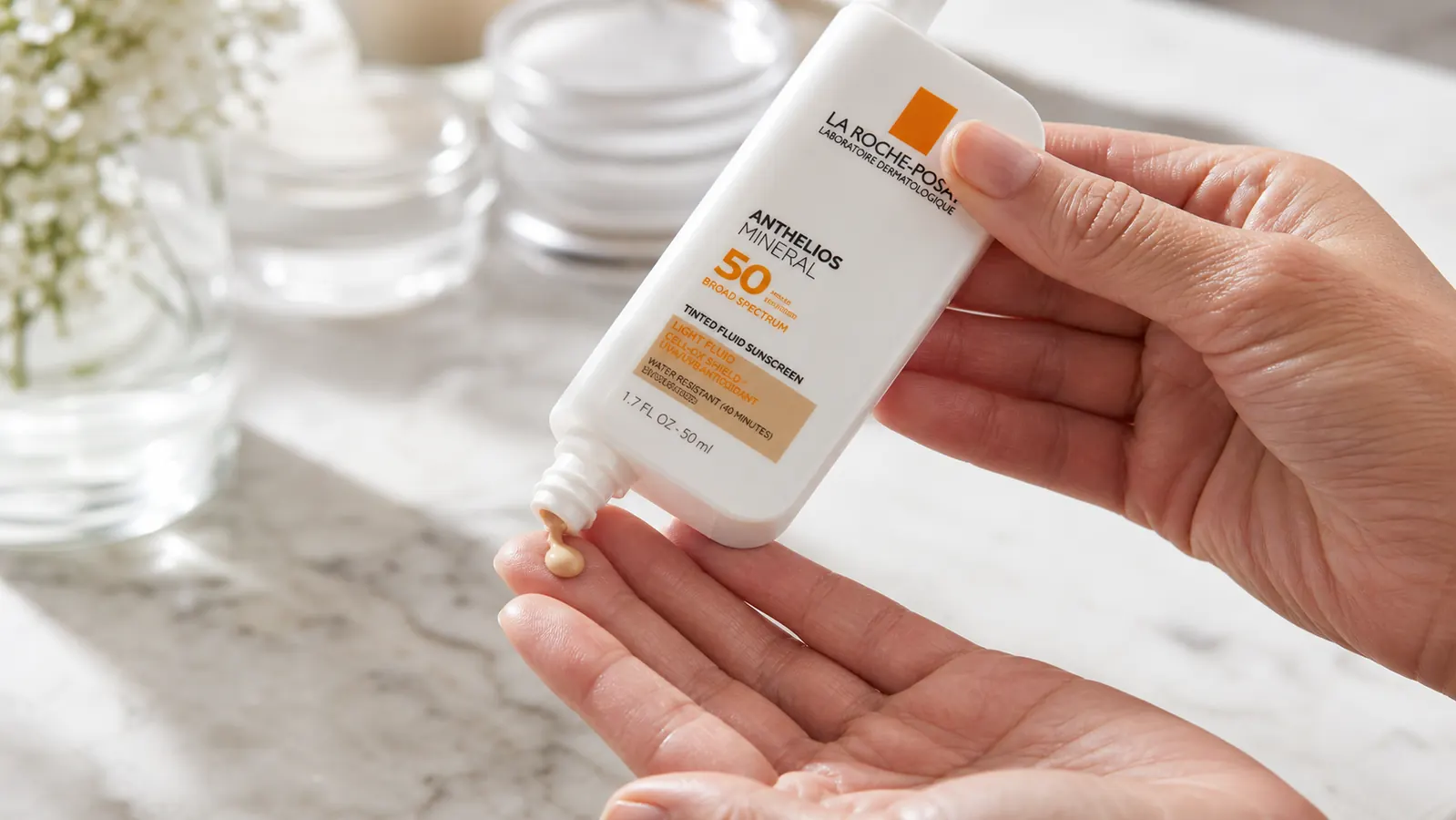
This is the part everyone with fair or reactive skin actually wants to know about, because most mineral sunscreens I've tried before this one left me looking faintly gray or ashy, especially around my hairline and jaw. The fluid itself is thin and almost watery, nothing like the thick, pasty mineral sunscreens I remember from years ago. It warms up slightly as you rub it in and the tint settles into a soft, neutral beige that reads close to my natural skin tone, though I have fair skin with pink undertones and I imagine the single shade offered won't match everyone equally well.
Under makeup it behaves better than I expected. I let it sit for a full minute, sometimes two, before applying foundation, and once it's set it doesn't pill or ball up the way some sunscreens do when a second product goes on top. On humid days it can look slightly shinier by early afternoon, which I manage with a quick blot of setting powder rather than a full touch-up. It's not a matte finish sunscreen and I stopped expecting it to be one after the first couple of weeks.
What's Actually in the Formula
The active ingredients are mineral filters, zinc oxide and titanium dioxide, rather than the chemical filters like avobenzone and oxybenzone that had caused my reactions in the past. That distinction is the entire reason I tried this bottle in the first place. It's also fragrance-free, which matters for anyone whose face reacts to scent the way mine does, and I never had a single instance of stinging, burning, or breakouts across four months of near-daily use.
Like any sunscreen sold in the United States, the label makes a specific, narrow claim, and it's worth repeating accurately rather than exaggerating it. Used as directed, a broad spectrum SPF 50 sunscreen like this one helps prevent sunburn, and when used regularly along with other sun protection measures such as limiting time in the sun and wearing protective clothing, it can help decrease the risk of skin cancer and early skin aging caused by the sun. That's the actual claim on the box, no more and no less, and it's not a promise that any sunscreen alone will treat or prevent a diagnosed skin condition. I can't independently verify the SPF number with lab equipment on my bathroom counter, but I never burned on a day I applied and reapplied it correctly, and that's the honest extent of what I can personally report.
It's also labeled water resistant for 40 minutes, which held up during actual lake swims in my experience, though I always reapplied immediately after toweling off rather than trusting the clock too far. On days I skipped reapplication after a swim, thinking the water resistance would carry me the rest of the afternoon, I noticed more shine and a slightly less even tint by evening. It's a reminder more than a complaint. Sunscreen only works when you actually put more of it on.
A Summer of Reapplication
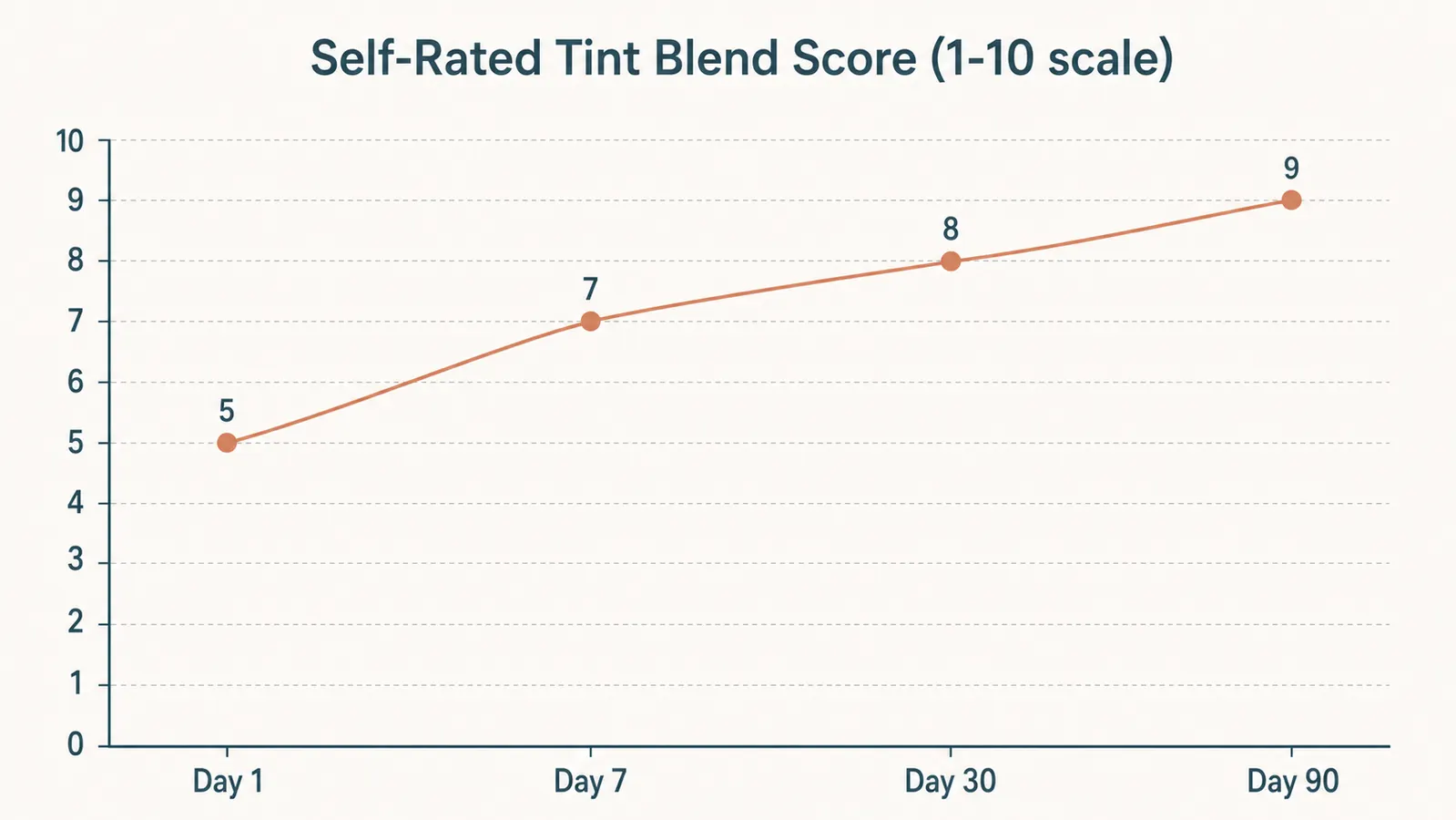
I kept a rough daily note rating how well the tint blended into my skin on a 1 to 10 scale, 10 being seamless and undetectable and 1 being visibly patchy or gray. On day one, before I'd figured out the right amount or blending technique, I rated it a 5. By day 7, once I'd settled into the two-finger-length application and the outward blending motion, that had climbed to a 7. By day 30 it was consistently landing around an 8, and by day 90 it had settled at a 9, where it stayed for the rest of the summer. None of that improvement came from the La Roche-Posay formula changing. It came entirely from me learning how to use it correctly, which is worth knowing before you assume a bad first impression means a bad product.
I did get one honest sunburn this summer, and I'm including it because a review that only reports good news isn't a review you can trust. It was the tops of my ears, on a long lake day in July, and it happened because I applied sunscreen to my face and neck that morning and simply forgot my ears entirely, twice. That's on me, not the formula. It's a good reminder that even a sunscreen that's working well only protects the skin you actually put it on, and ears are the single most common spot people forget.
Where It Held Up and Where It Didn't
The consistency is what won me over. Not one stinging or burning reaction in four months, no clogged pores or breakouts despite wearing it every single day, and a tint that genuinely disappeared into my skin once I learned to apply it correctly. It layered fine under makeup, held through humid afternoons with a quick powder touch-up, and survived actual lake swims better than I expected from a fluid this thin.
The tradeoffs are real, though. The La Roche-Posay bottle runs out faster than a typical drugstore sunscreen, because getting real SPF coverage requires more product than most people are used to applying, and I went through roughly a bottle a month with daily face and neck use. It only comes in one tint, which worked for my fair skin tone but likely won't match everyone, and anyone with deeper skin will probably need a different tint or need to mix it with a warmer foundation shade. It also costs more per ounce than most drugstore sunscreens, which is worth knowing before you commit to using the full recommended amount every day.

The Sunscreens I Tried Before This One
Before this bottle, I went through a genuinely long list of failed attempts. A popular chemical sunscreen left my cheeks stinging within minutes of application, every single time, for two summers before I gave up on it entirely. A cheaper mineral stick left visible white streaks I could never fully blend out, especially along my jaw. I also spent a summer with EltaMD's mineral formula, which is the other sunscreen most dermatologists mention in the same breath as this one, and it was genuinely good, just noticeably thinner in texture with no tint option built in, so I still needed a separate tinted moisturizer underneath. I laid out the full side-by-side comparison, texture, tint, reapplication habits and all, in this Anthelios versus EltaMD comparison for anyone deciding between the two before buying either.
What I Liked
- Mineral zinc oxide and titanium dioxide formula with zero stinging or burning on my sensitive skin across four months
- Tint blends into fair skin within a minute once you learn the right application amount
- Fragrance-free and never caused a breakout or clogged pore
- Held up through humid lake days and actual swimming with reapplication
- Thin, fluid texture layers cleanly under makeup once fully set
Where It Falls Short
- Runs out faster than typical drugstore sunscreen because real coverage needs more product than most people apply
- Only comes in one tint shade, which won't match every skin tone
- Costs more per ounce than most drugstore options
- Can look slightly shinier by afternoon on humid days without a powder touch-up
- Won't prevent sunburn on any skin you forget to apply it to, ears included
The tint didn't get better because the formula changed. It got better because I finally learned how much sunscreen a real SPF 50 actually requires, and stopped shortchanging my own face.
Who This Is For
If chemical sunscreens have ever left your face stinging, flushed, or itchy, or if you've been chasing a tinted mineral formula that doesn't leave a gray or white cast on fair to light-medium skin, this is worth trying. It's also a solid pick if you're layering it under makeup daily and want one step that handles both sun protection and light color correction. Anyone dealing with reactive or easily irritated skin benefits from mineral filters specifically, and you can read more about why that matters for sensitive skin in this rundown of what mineral sunscreen actually does.
Who Should Skip It
If you have deep or very dark skin, the single tint shade is genuinely a limitation and you'll likely need to mix it with a warmer foundation or look for a shade-matched alternative instead. If you're on a tight budget and reapply sunscreen liberally throughout the day, the cost per ounce will add up faster than a drugstore lotion. And if you're looking for a sunscreen to treat an existing skin condition or diagnosed sun sensitivity, talk to a dermatologist first. This is sun protection, not a treatment for anything, and it should never replace medical guidance.
Four Months Later, It's Still the Bottle by My Front Door
That's not nothing for someone who used to dread putting sunscreen on every morning. See today's price on the La Roche-Posay and decide if it earns a spot by yours.
Amazon Check Today's Price on Amazon →