
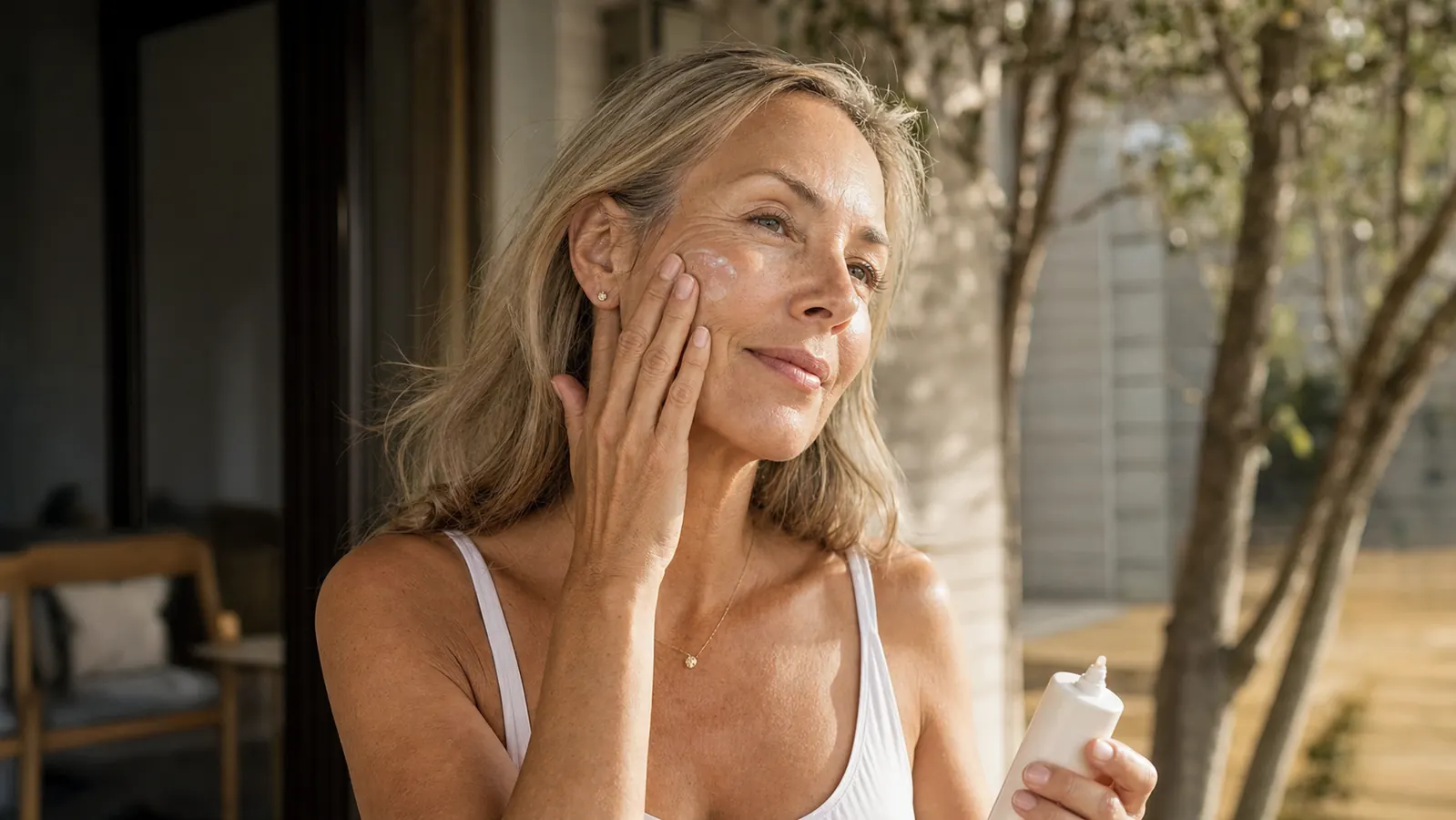
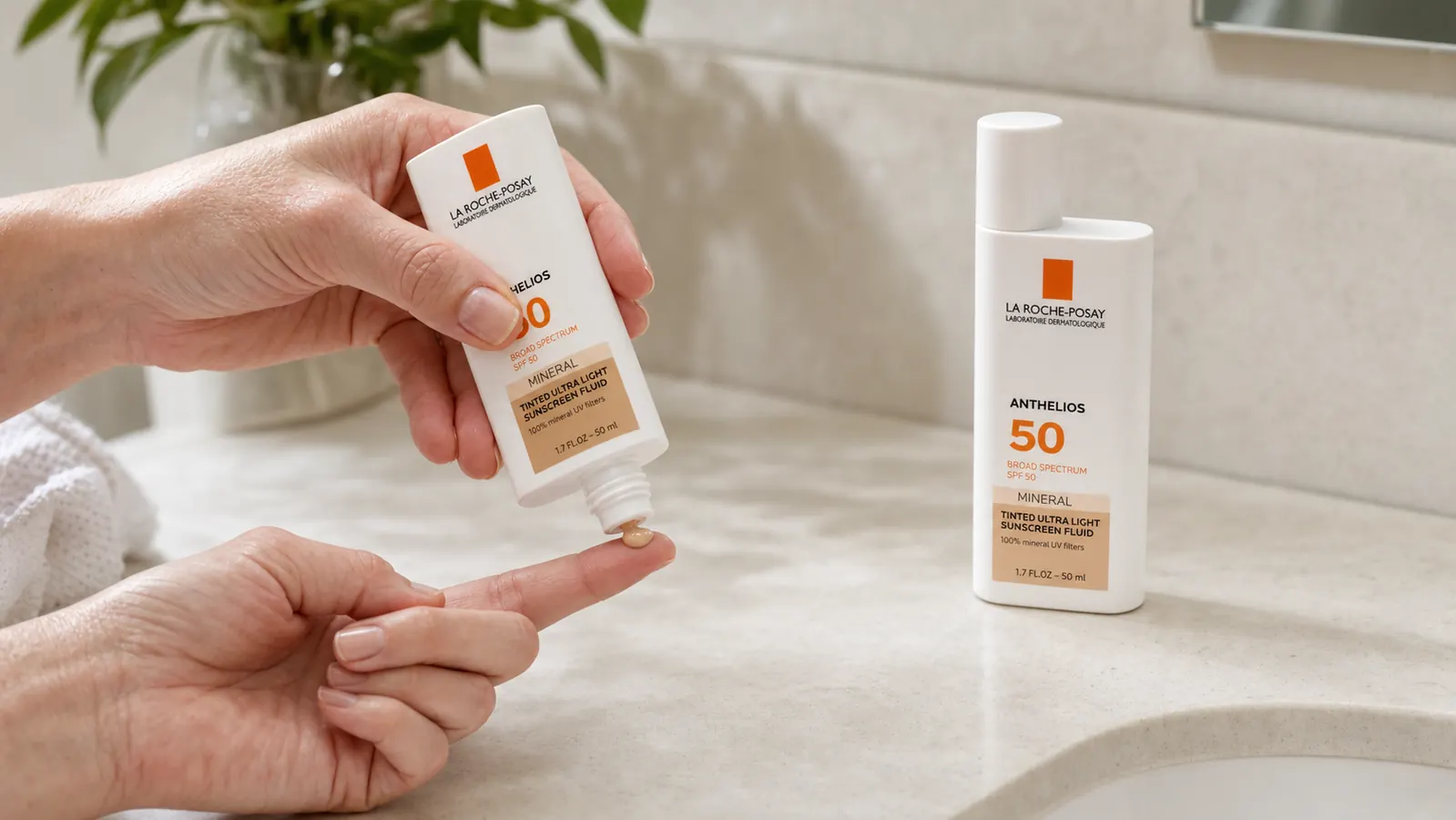
My cheeks used to turn pink and itchy about ten minutes after I put on sunscreen, no matter how gentle the bottle claimed to be. It happened at the pool, in the car with the windows up, standing at the mailbox in July. For about six years I figured that was just what sunscreen did to skin like mine, so I either skipped it or gritted my teeth through the sting. Then someone at a dermatology office suggested I try a mineral formula instead of the chemical ones I kept rotating through, specifically La Roche-Posay Anthelios 50 Mineral Tinted Ultra Light Sunscreen Fluid, and the stinging just stopped showing up.
I am not a chemist and I do not pretend to understand every ingredient on that label. What I do know is I have worn this tube almost daily for over a year now, through humid summers and dry winter mornings, and my skin has never once flagged it the way it flagged every drugstore chemical sunscreen before it. Here are the ten reasons a mineral formula like this one earned a permanent spot on my bathroom shelf, especially if your skin reacts to almost everything you put on it.
Tired of Sunscreen That Fights Your Skin Instead of Protecting It?
La Roche-Posay Anthelios 50 Mineral Tinted Ultra Light Sunscreen Fluid is broad spectrum SPF 50, built around zinc oxide instead of the chemical filters that tend to sting reactive skin. See if it's in stock at today's price.
Amazon Check Today's Price on Amazon →It sits on top of skin instead of soaking into it
Mineral filters like zinc oxide work by sitting on the surface of your skin and reflecting UV rays away, rather than absorbing into skin and converting rays into heat the way chemical filters do. That absorption step is where a lot of stinging and flushing on reactive skin actually starts. Once I switched to a formula built around zinc oxide, that hot, itchy feeling under my sunscreen just never showed up again, even on the days I forgot and reapplied over already-warm skin.
No stinging when it runs near my eyes
My old sunscreens would run into the corners of my eyes within an hour of a sweaty walk, and it burned enough that I'd tear up in public more than once. La Roche-Posay Anthelios does the same job without that reaction. I still keep it away from my actual eyelids out of habit, but the areas right around my eyes, where sweat and sunscreen always used to mix and sting, stay completely comfortable now, even on hot afternoons.
My redness cleared up faster than I expected
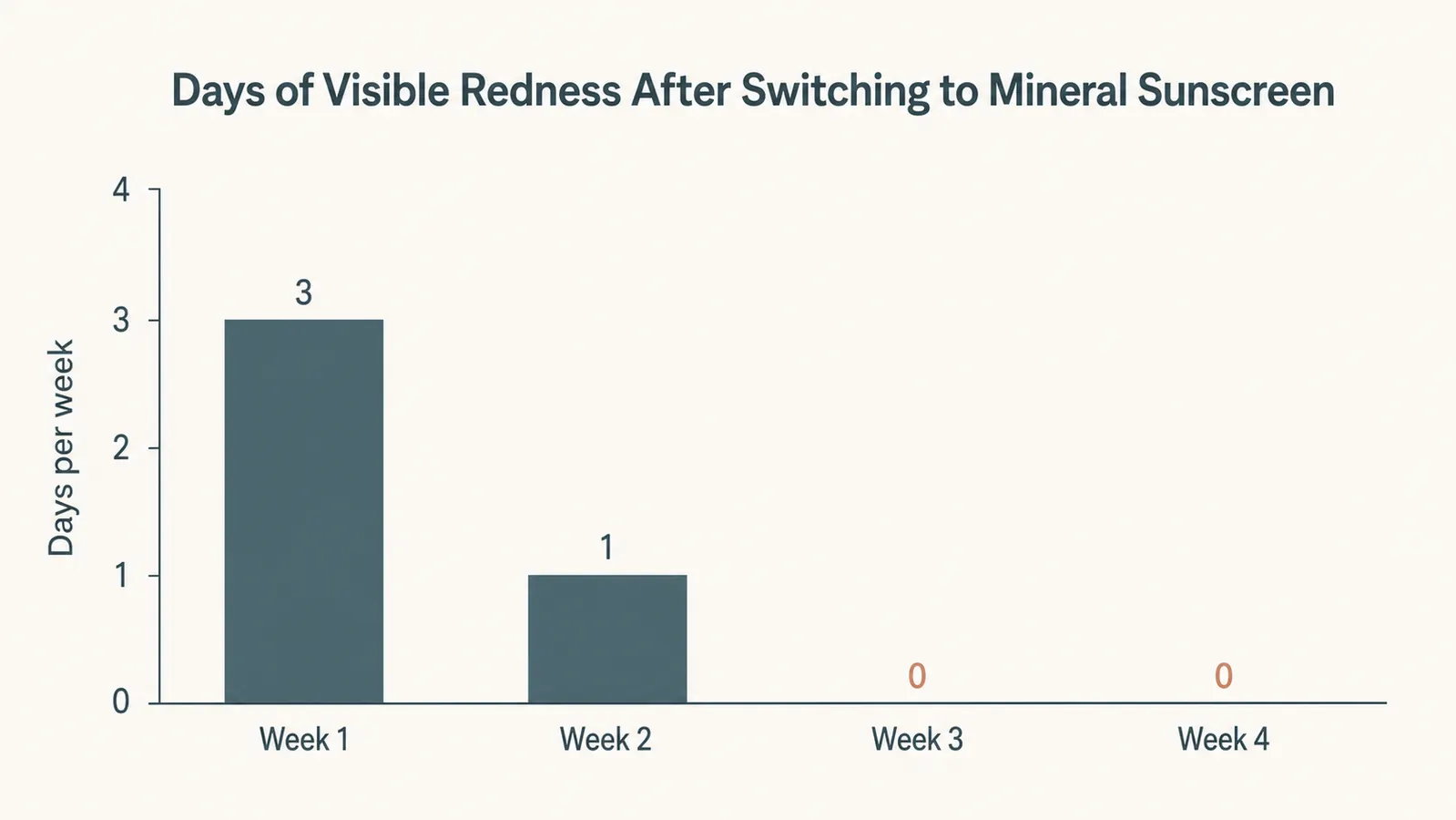
I started keeping a rough log the week I switched, mostly out of curiosity. In week one I still had visible redness on three separate days, usually after being outside for a while. By week two that dropped to one day. By week three and four it was zero. I cannot promise your skin will follow the exact same timeline, but that steady drop is exactly the kind of pattern I was hoping to see after years of unpredictable flare-ups. I wrote about the full months-long stretch in my long-term Anthelios review if you want the whole story.
It's broad spectrum SPF 50, no guesswork required
This formula is labeled broad spectrum SPF 50, which means it's tested to cover both UVA and UVB rays at a strength most dermatology offices recommend for daily wear. Used as directed and paired with the other basics, shade, a hat, reapplying regularly, that kind of coverage does what the label promises without me needing to layer on a second sunscreen underneath it or wonder if I'm actually protected. I put the whole daily routine together in a step-by-step sun protection guide if you want the specifics.
The tint means I skip a separate makeup step
This particular Anthelios formula comes with a light universal tint built in, which evens out my skin tone enough that I skip foundation on most days entirely. It is not a full-coverage product and I still use concealer where I need it, but on an ordinary weekday it saves me an entire step in front of the mirror. For anyone who has ever put sunscreen on and then had to fight it under makeup twenty minutes later, that alone is worth trying.
It layers under makeup instead of pilling on top of it
Older mineral sunscreens had a reputation for balling up under foundation, leaving little rolled bits of product on your cheeks by lunchtime. This ultra light fluid does not do that for me. I give it about a minute to settle before I add anything else, and from there my concealer and setting powder go on smooth. It is the first mineral sunscreen I've used that did not turn my whole morning routine into an extra ten minutes of damage control.
It holds up through a sweaty afternoon
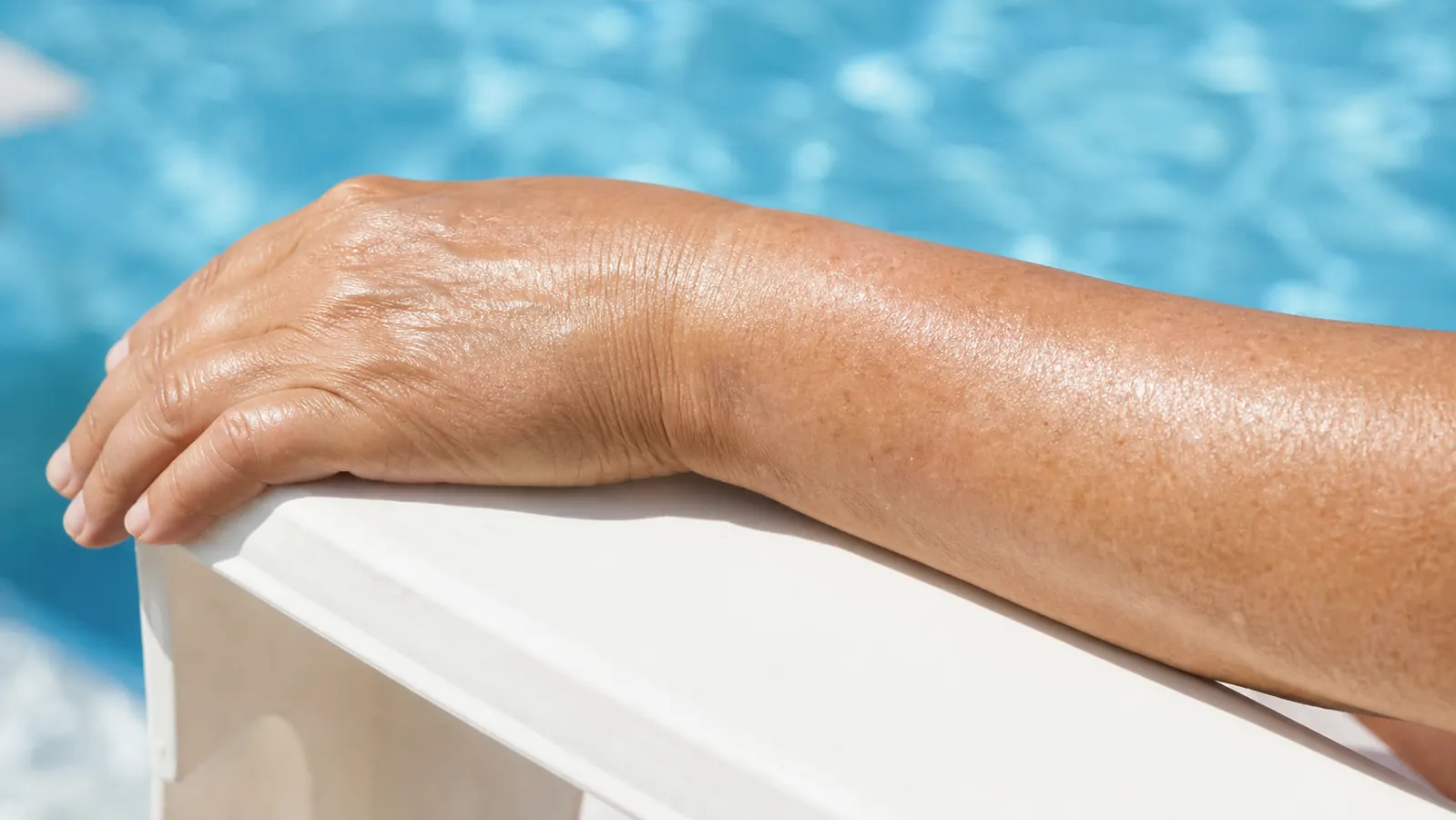
I have worn this through yard work, a couple of long pool days with my grandkids, and one memorably humid trip to Savannah in August. It does not slide off the second I start sweating the way some lightweight formulas do, and it survives a splash of pool water well enough that I don't feel like I need to reapply every twenty minutes out of paranoia. I still reapply on schedule, but I'm not chasing it off my own face all afternoon.
A shorter, more familiar ingredient list
I am not against science I don't understand, but I do like being able to recognize most of what's in something I put on my face daily. Mineral sunscreens generally lean on fewer active ingredients than the five- and six-filter chemical blends I used to buy. Fewer moving parts means fewer chances for one random ingredient to be the thing my skin decides to react to, which matters a lot when you're the type of person who has to read every label before buying anything new.
No thick white cast left behind
White cast used to be the trade-off I accepted for a mineral sunscreen that didn't sting. This tinted formula blends into my skin tone without that chalky gray-white finish older zinc formulas were known for. I can put it on and walk out the door without checking a mirror twice to make sure I don't look like I forgot to rub it in, which used to happen constantly with cheaper mineral options.
The bottle is still on my counter a year later
That is the real test for me at this point. I have bought plenty of well-reviewed skincare that sat half-used in a drawer within a month because it didn't feel good to use. This one is still the first thing I reach for most mornings, over a year in. It is not the cheapest sunscreen on the shelf, but it's the one I have actually finished bottle after bottle of instead of abandoning halfway through.
What I'd Skip
I'd skip heavily fragranced sunscreens if your skin reacts to much of anything, even the ones labeled 'dermatologist tested,' since that phrase doesn't mean fragrance-free. I'd also skip spray sunscreens for daily facial use. They're convenient for bodies at the beach, but it's hard to control how much actually lands on your face, and I've had more than one reaction from a spray formula that never happened with a fluid or lotion I applied by hand. And I would not buy the very cheapest mineral option just because it says zinc oxide on the front. The texture and tint quality vary enormously, and a bad texture is the fastest way to end up back in the sunscreen-skipping habit I was trying to break in the first place.
The best sunscreen isn't the one with the fanciest packaging. It's the one still on your counter in July.
Ready to Stop Choosing Between Sun Protection and Comfortable Skin?
If your face reacts to most sunscreens you've tried, a mineral formula built around zinc oxide is worth testing before you write off SPF altogether.
Amazon Check Today's Price on Amazon →