
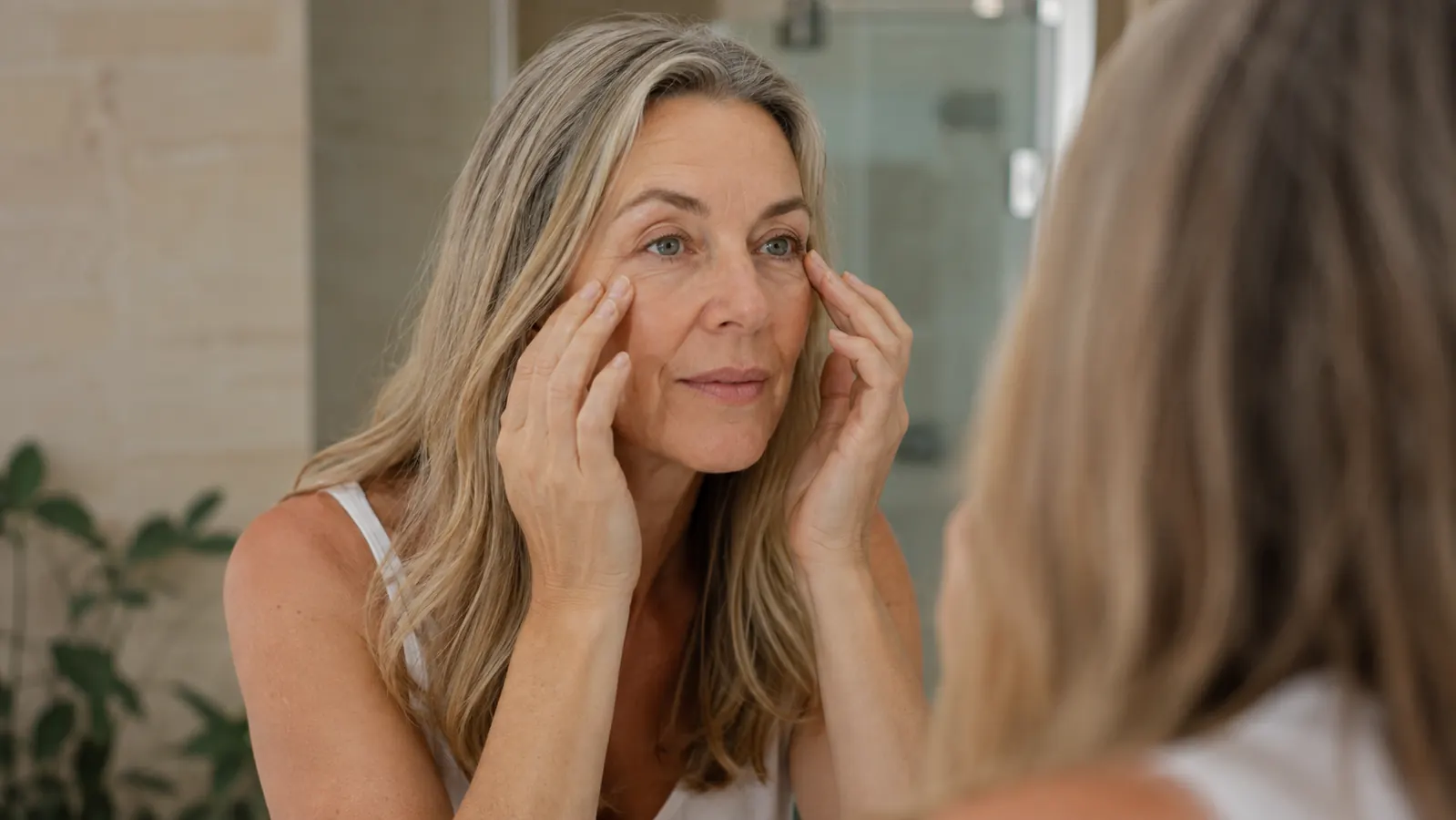
I used to stand at my bathroom mirror every morning pulling the skin under my eyes tight with two fingers, like that would somehow make the pillow-looking part disappear before a 9am Zoom call. It never worked, and it made my eyes look more tired, not less. What actually helped was giving up on a five-minute miracle and building a boring, repeatable little routine, the kind where CeraVe Eye Repair Cream just quietly does its job every morning instead of me chasing whatever eye patch went viral on TikTok that week.
Before I walk you through it, I want to be straight with you the way I'd want a friend to be straight with me. An eye cream, including the one I use in Step 2 below, can help the appearance of puffiness and shadowing when the cause is fluid retention, dehydration, or plain exhaustion. It is not going to change under-eye bags that come from fat pads shifting position with age, that's a structural thing a dermatologist addresses, not something a jar of moisturizer fixes. And if you have a diagnosed skin condition, an eye allergy, or you're already on a prescription retinoid near your eyes, talk to your dermatologist before adding anything new to that area.
The Cream I Actually Keep Refilling
CeraVe Eye Repair Cream uses hyaluronic acid and niacinamide in a fragrance-free formula built for the thin skin under your eyes. It's the product I reach for in Step 2 below.
Amazon Check Today's Price on Amazon →Step 1: Start With Cold, Not Cream
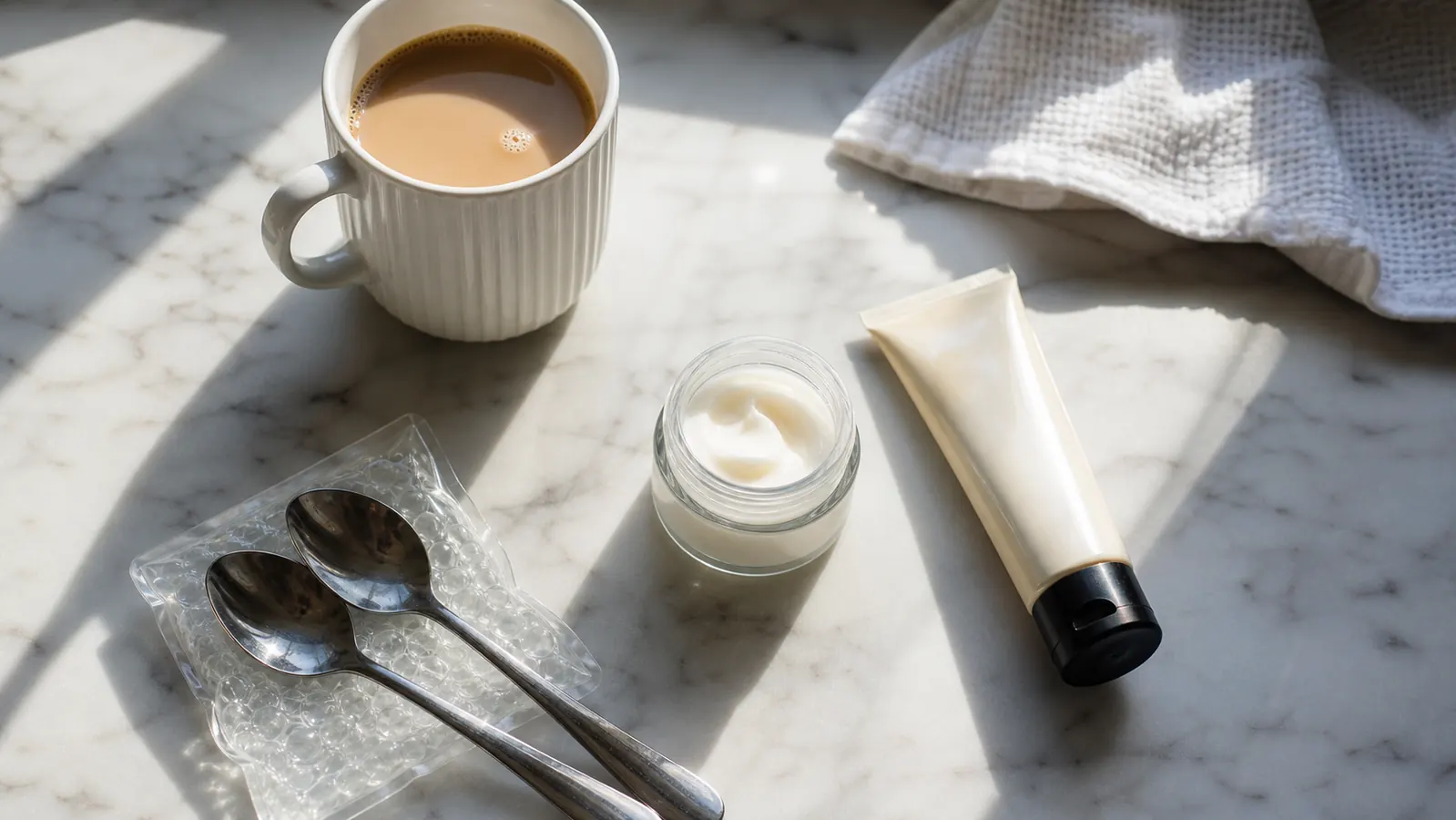
Before any product touches my face, I splash cold water and hold something cold under each eye for about two minutes. Cold narrows the tiny blood vessels close to the skin, which is part of why your under-eye area looks less puffy and less pink right after. I keep two metal soup spoons in the freezer door for exactly this. If that sounds like too much effort at 6:45am, a cold gel eye mask from the drugstore works just as well and takes the guesswork out of timing.
Do this step before you apply anything with an active ingredient. Cold compresses work on fluid, not on skin barrier or pigment, so they're really just prepping the area, not treating it. I do mine while the coffee brews, so it never feels like an extra task, it's just something that happens while I'm already standing there waiting.
I've also tried a chilled jade roller for this same two minutes, and honestly it does close to the same thing as the spoons, it just glides instead of pressing. Neither tool is better on its own, they're just different ways of getting the same cold contact on the skin. Some mornings, if I've slept well and I'm not visibly puffy, I skip this step entirely and go straight to the eye cream. It's not a step you need every single day, it's a step you use when your face needs it.
Step 2: Pat On a Dedicated Eye Cream, Don't Rub
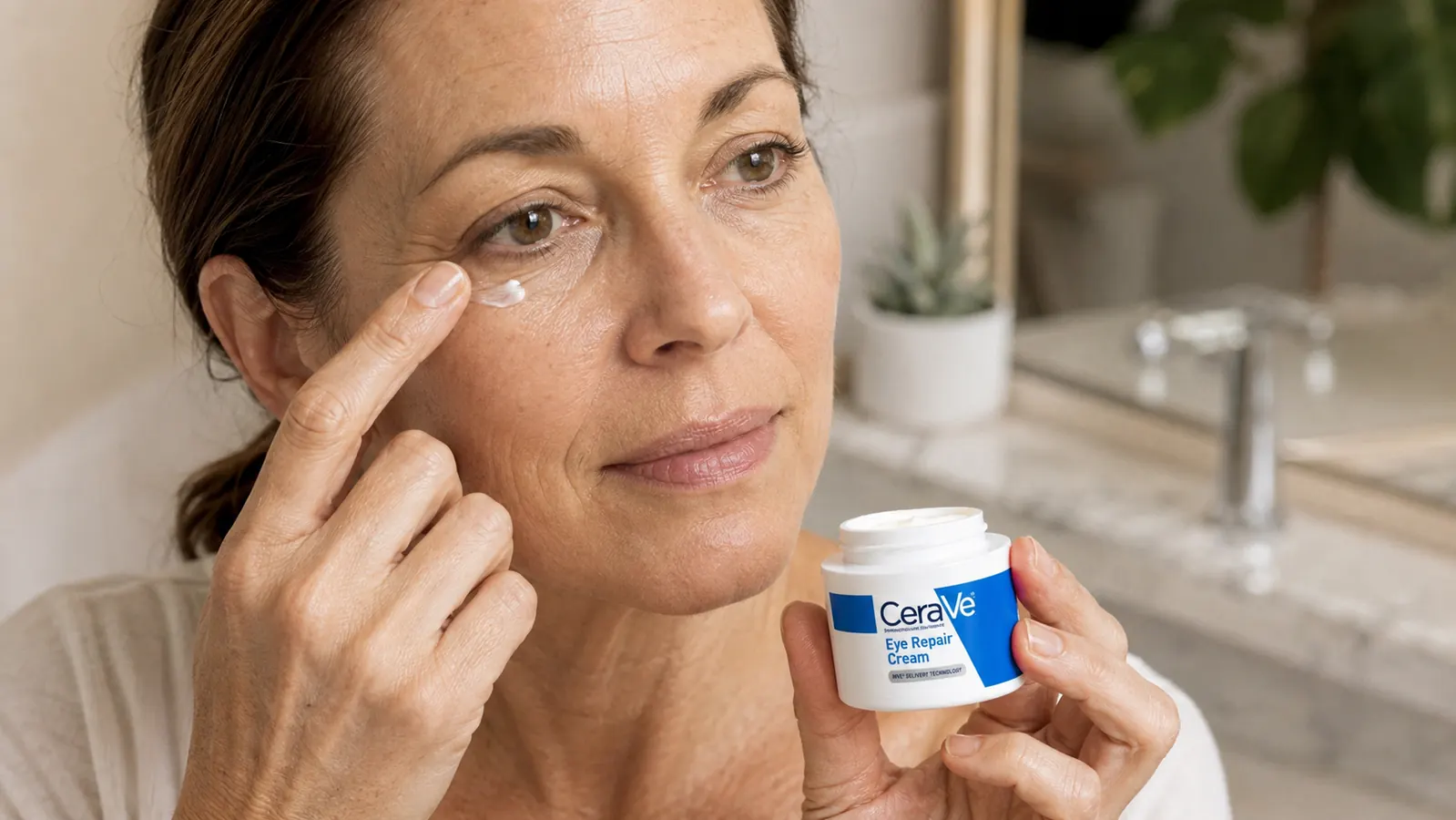
The skin under your eyes is thinner than the rest of your face, so this is not the place to swipe on whatever moisturizer you just used on your cheeks. I use my ring finger, the weakest finger on your hand, and tap a rice-grain amount along the orbital bone, never right up against the lash line. CeraVe Eye Repair Cream is fragrance-free and built around hyaluronic acid and niacinamide, which is why I landed on it after trying a couple of pricier serums that stung and one that pilled under concealer by 10am.
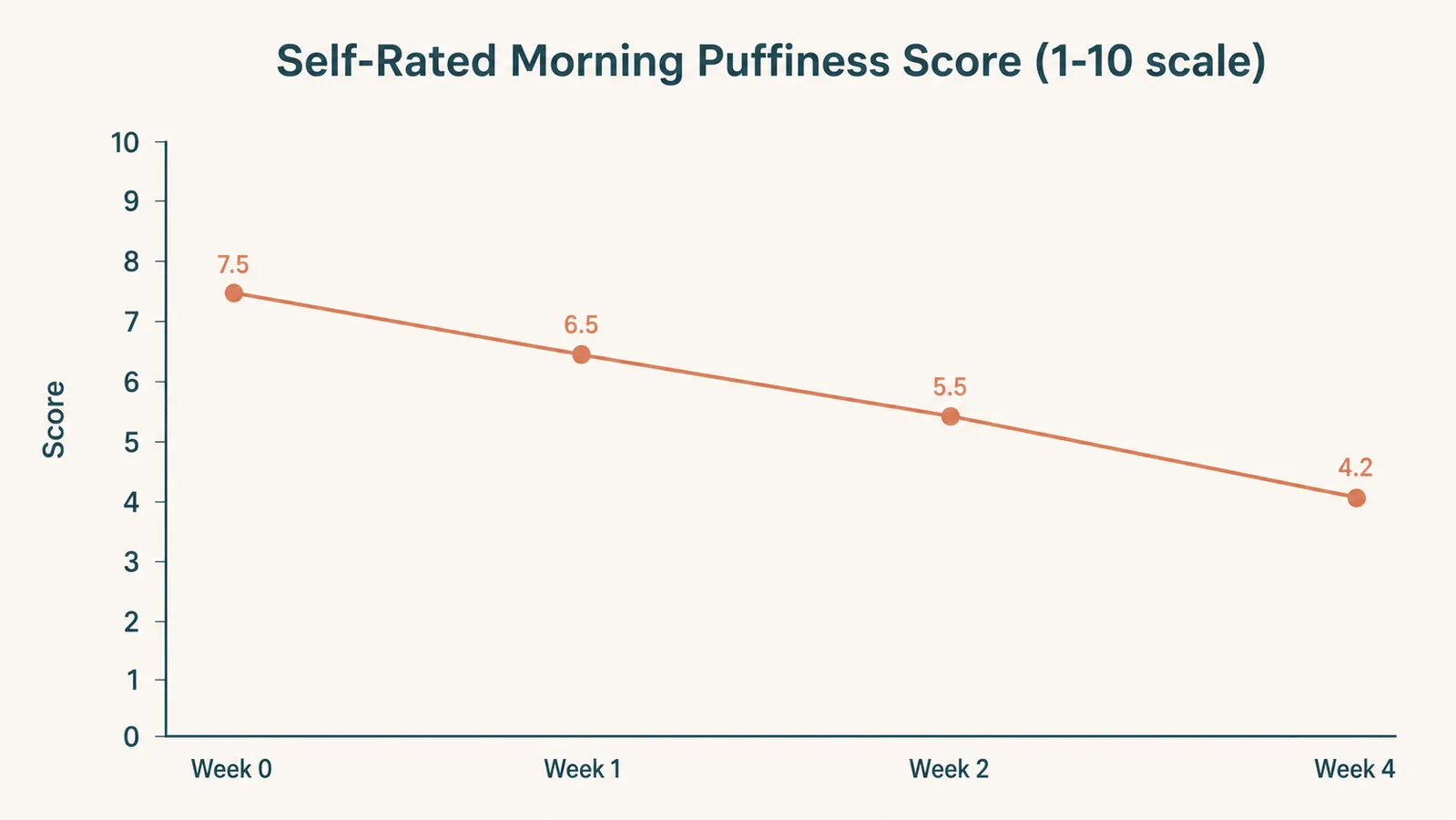
I started tracking this the boring way, rating my own puffiness on a scale of 1 to 10 every morning before makeup, based purely on how tired I looked in a bathroom mirror photo. Week 0 I was sitting around a 7.5. By week 2 I was closer to 5.5. By week 4 I'd settled around 4.2, and honestly it plateaued there, which tracks with what I found when I wrote the full long-term CeraVe Eye Repair Cream review. It didn't erase anything, but the difference in photos was real enough that a coworker asked if I'd started sleeping more.
Texture-wise it's lighter than I expected the first time I opened the jar, almost gel-cream rather than heavy, and it sinks in fast enough that I'm not sitting around waiting to put on concealer. It doesn't have a scent, which matters more than people think this close to your eyes, a strong fragrance right under your nose all day gets old fast. I use it twice a day, once in this morning routine and once before bed, though the morning application is the one doing the cosmetic work you'll actually notice in photos.
Step 3: Layer Sunscreen Over It, Not Under It
Once the eye cream has fully absorbed, usually a minute or two, I move on to sunscreen. Sun exposure makes thin under-eye skin look even thinner over time and tends to make dark circles read darker, so this step matters more than people think for keeping the whole area looking rested. I use a mineral formula and apply it with a fingertip along the orbital bone the same way I applied the eye cream, staying far enough from the lash line that it won't migrate into my eyes an hour later.
If a sunscreen stings your eyes no matter how carefully you apply it, that's worth switching over, not pushing through. I went through two bottles before I found one my eyes tolerated, and now it's just part of the same three-minute stretch at the sink. The order matters here: cream first so it can absorb, sunscreen second so it sits on top and actually does its job.
I patch-tested my sunscreen on my inner arm for two days before I ever put it near my eyes, which sounds excessive until you've had a formula make your eyes water in the middle of a work meeting. Mineral formulas tend to be gentler around the eye area than chemical ones, though everyone's skin reacts differently, so patch testing anything new beats finding out the hard way. It's a five-minute step once, and it saves you from tossing a bottle after one bad morning.
Step 4: Fix What Happens Overnight, Not Just at the Sink
A lot of morning puffiness gets decided the night before, not at your bathroom mirror. Lying flat lets fluid settle in the lowest part of your face, which is your under-eye area, so an extra pillow or a slight incline makes a visible difference by morning. I noticed this the hard way on nights I fell asleep on the couch flat on my back, I'd wake up looking noticeably puffier than on nights I slept propped up in bed.
Salt and alcohol the night before do the same thing, they pull water into your tissue and your face holds onto it overnight. I'm not telling you to give up salty takeout, I still order it, but I've learned that a salty dinner the night before a big morning means I build in extra time for the cold compress in Step 1. It's less about a strict rule and more about knowing what to expect from your own face.
Screens before bed play into this too, not because of some mystical blue light effect, but because scrolling in bed usually means staying up later than planned, and less sleep shows up under your eyes the next morning almost every time. I switched to a wedge pillow instead of stacking regular pillows, mostly because stacked pillows kept sliding apart by 3am and I'd wake up flat again anyway. It's a small investment that made the elevation trick actually work instead of just being a nice idea I never followed through on.
Step 5: Use Color, Not Cream, For the Rest
Some puffiness and shadowing is just going to be there on any given morning, no matter how good your routine is, and that's where a color corrector earns its spot on the counter. A peach or orange-toned corrector cancels out blue-purple undertones better than a heavier concealer alone, especially on fair to medium skin. This is a same-day cosmetic fix, not a treatment, and I think of it as completely separate from the actual skincare steps above.
If you want the full list of why a dedicated eye cream earns its own step instead of just using your regular moisturizer, I laid out the reasoning in 10 reasons an eye cream reduces puffiness and dark circles. It's a quicker read than this one and covers the ingredient side in more detail.
One thing that took me embarrassingly long to figure out: press concealer on with a damp sponge instead of dragging it on with a finger or brush. Dragging pulls at thin under-eye skin and settles into fine lines by midday, pressing keeps it smoother longer. I set it with a light dusting of translucent powder just under the eye, not all over, or the concealer creases by early afternoon no matter how good the formula is.
What Else Helps
A few things outside this five-step routine make a real difference too. Drinking water earlier in the day instead of right before bed means less fluid pooling by morning. Seasonal allergies puff up under-eye skin fast, so if yours flare in spring, an antihistamine your doctor approves can matter more than any cream. A humidifier in the bedroom helps if your skin feels tight and dry when you wake up, which can make puffiness look worse by contrast. And genuinely, blinking more during long screen stretches keeps the whole eye area from looking as strained by 4pm, small thing, but it adds up.
Cutting back on evening caffeine helped me more than I expected, since caffeine late in the day disrupts sleep quality even when it doesn't feel like it's keeping you awake, and poor sleep is one of the most reliable ways to wake up puffy. Regular movement, even a short walk, seems to help circulation generally, though I can't point to a single morning where I traced puffiness directly to exercise. None of these are dramatic changes, they're just the kind of boring habits that stack up over a few weeks.
If you've tried a routine like this consistently for six to eight weeks and you're just not seeing any change in the appearance of puffiness, that's worth a conversation with a dermatologist rather than switching creams for the third time. Persistent puffiness that doesn't respond to lifestyle changes can sometimes point to allergies, thyroid issues, or simply the natural fat pad shifting I mentioned earlier, none of which a cream is built to fix. A dermatologist can tell you which one you're dealing with in about five minutes, which beats guessing your way through another six products.
A tired-looking jar of eye cream sitting untouched on the counter helps nobody. The only routine that works is the one you actually finish.
Give It Four Weeks Before You Judge It
Puffiness doesn't reset overnight, but a consistent morning routine with CeraVe Eye Repair Cream is the least fussy way I've found to make mornings look less exhausted than they feel.
Amazon Check Today's Price on Amazon →