
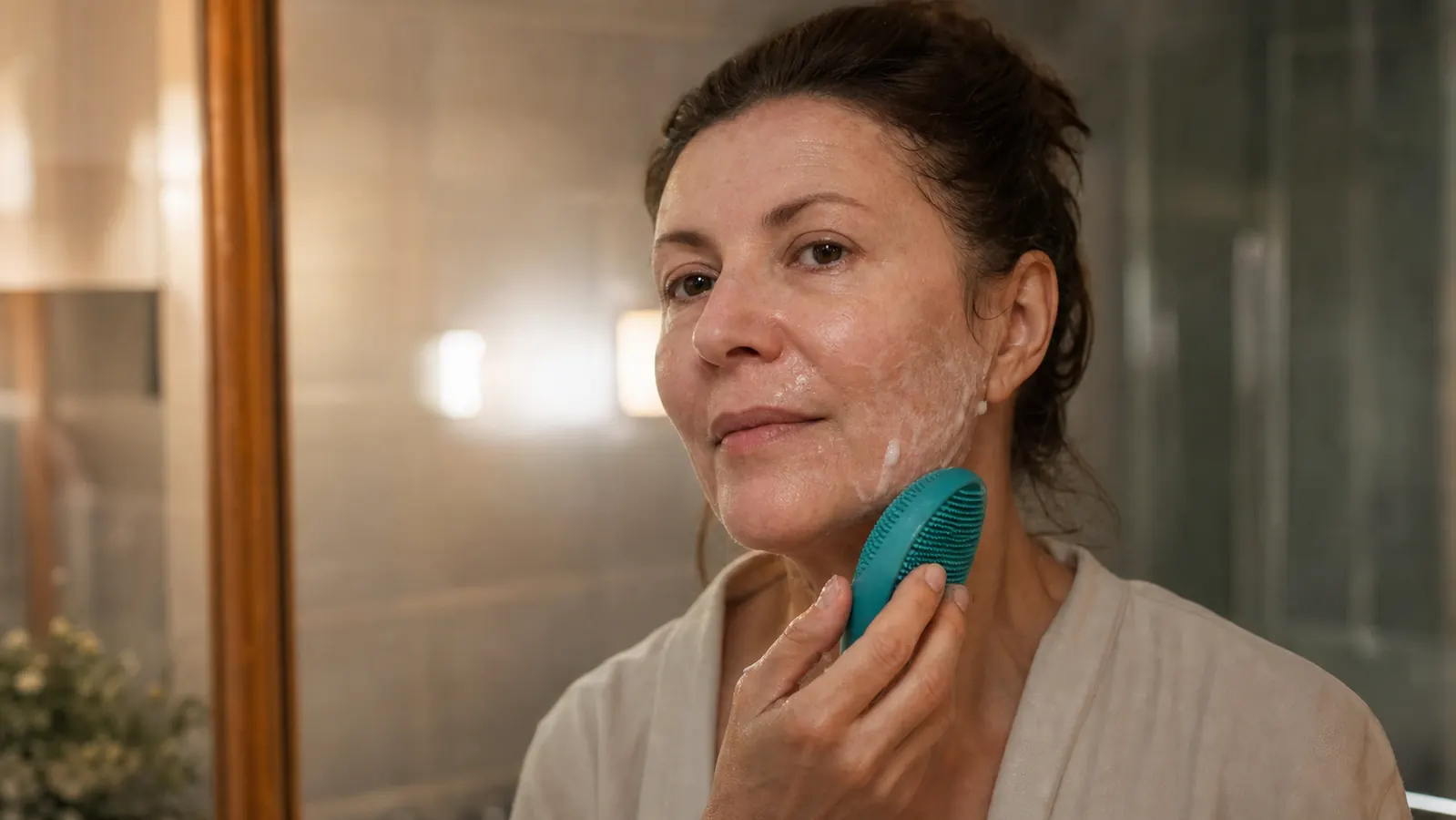
The side of my nose and the crease along my chin have always been where clogged pores show up first for me. I could wash my face twice a day, every day, with a decent cleanser, and by evening those two spots still looked dull and slightly bumpy under a magnifying mirror. For years I assumed that was just how my skin was going to be after fifty. It turned out the bigger problem wasn't my cleanser. It was that my fingertips were only ever moving product around on the surface instead of actually working it into the texture where the buildup was sitting.
I want to be upfront about what this routine can and can't do. No brush, silicone or otherwise, erases a clogged pore permanently or clears an active breakout. What a tool like the EZBASICS silicone cleansing brush can do is physically loosen and lift the surface buildup, oil, and leftover sunscreen that settle into rougher texture around the nose, chin, and jawline, so your existing cleanser actually reaches it instead of sliding past it. If you have a diagnosed skin condition, active acne you're treating with a prescription, or skin that's currently irritated, talk to a dermatologist before adding any mechanical brushing to your routine, gentle or not.
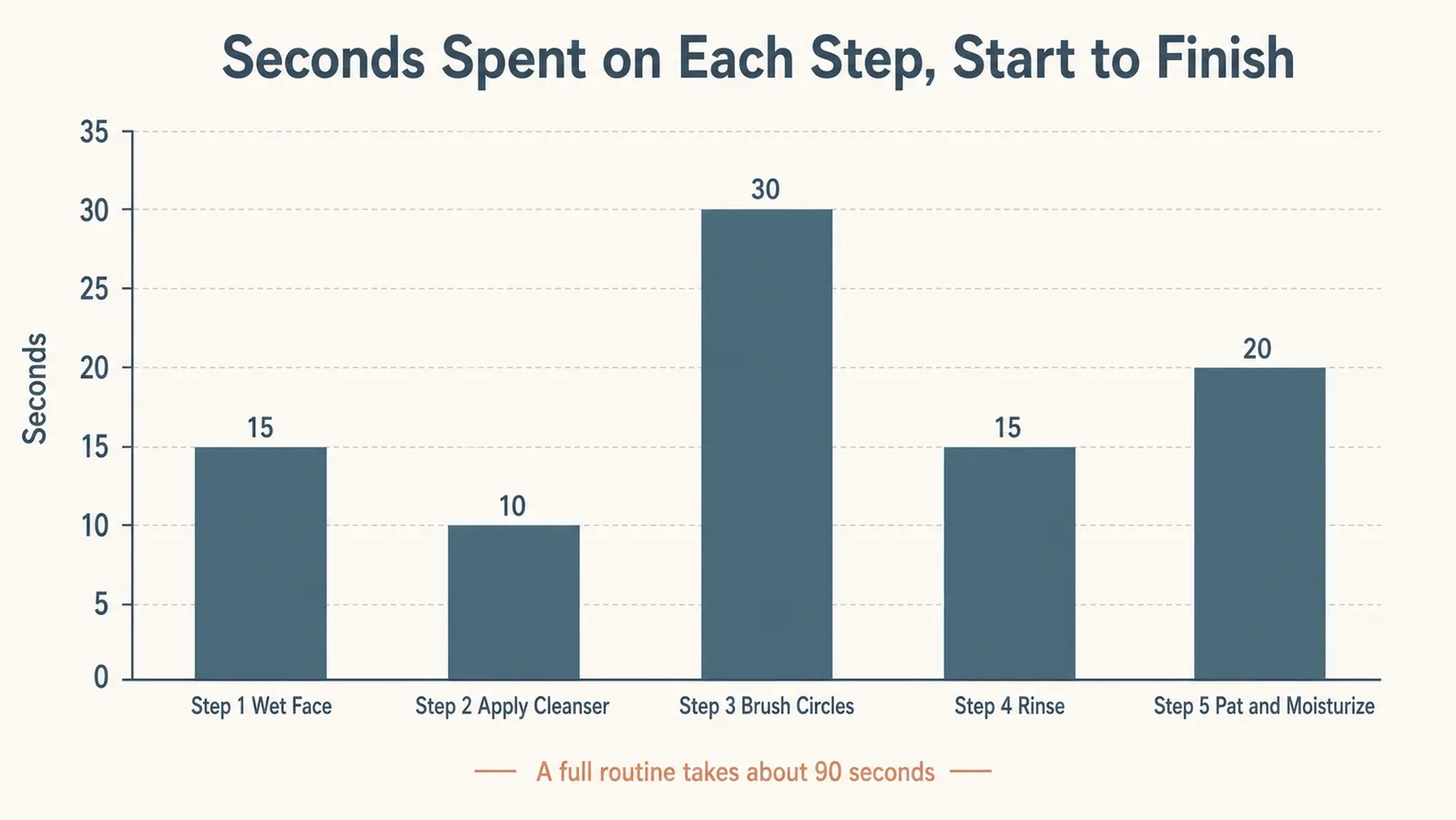
This is a five-step routine I built after months of trial and error, mostly the error part. I tried scrubbing harder, which just left me red. I tried a stiffer bristle brush, which felt like sandpaper by day three. What finally worked was slowing everything down, choosing a gentler tool, and treating this like a habit to build rather than a fix to rush through in a week. None of it takes more than about ninety seconds total, which is roughly what I already spent standing at the sink washing my face by hand.
Your Fingers Can Only Do So Much
This is the tool the five steps below are built around, gentle enough for daily use and strong enough to actually reach the texture your fingertips keep missing.
Amazon Check Today's Price on Amazon →Step 1: Start With Lukewarm Water, Not Hot
Splash your face with water that's comfortably warm, closer to the temperature of a warm handshake than a hot shower. Hot water feels satisfying for a second, but it strips your skin's natural oils and can leave you red and tight before you've even picked up the brush. Lukewarm water softens the surface layer just enough to make everything that follows more effective, without the rebound dryness that hot water tends to cause by evening.
Give it a full ten to fifteen seconds, not a quick splash and done. I keep the tap running at a steady, gentle stream and cup my hands under it three or four times, working from my forehead down to my jaw. This is also a good moment to take your contacts out or push your hair back with a headband if you use one, since the next steps go faster when you're not fighting stray hair at your hairline.
If you're doing this routine right after coming in from cold weather, give your skin a minute to come back to a normal temperature before you start. Washing with warm water while your face is still wind-chapped can make an already reactive day feel worse, and it's a small enough adjustment that it's worth building into the habit.
Step 2: Choose a Tool That Reaches Where Fingers Can't
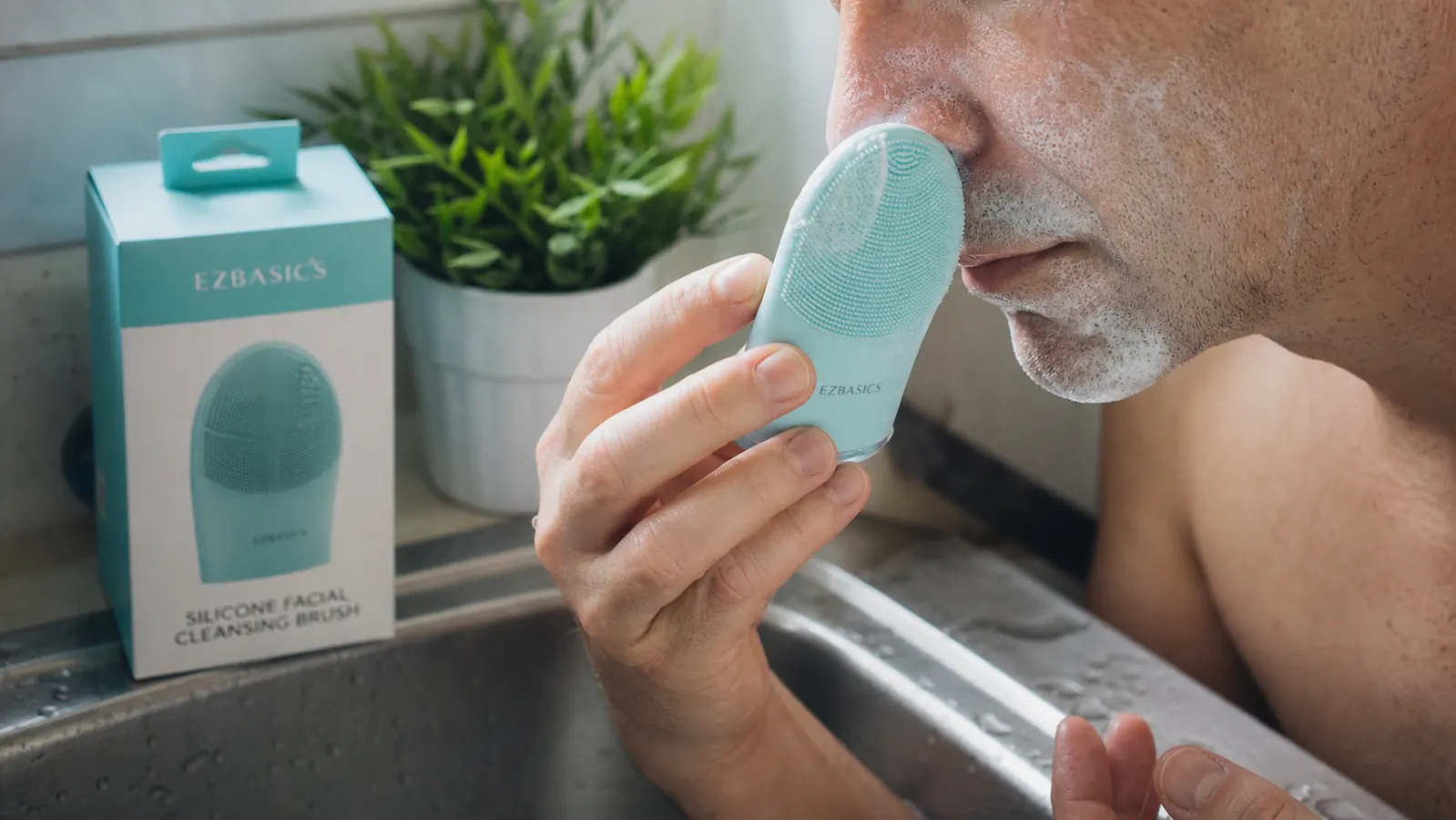
This is the one step where the actual tool matters, and it's the only place in this routine I'm going to point you toward something specific. A silicone cleansing brush like the EZBASICS works because the small, soft nubs flex into the texture around your nose creases and jawline in a way that flat fingertips simply can't. Fingers are good at spreading cleanser evenly. They're not built to get into the slightly uneven surface where clogged pores tend to collect, and that's the gap this kind of tool is meant to close.
Dispense a nickel-sized amount of your regular gel or cream cleanser onto the wet brush head rather than your palm. Silicone bristles instead of nylon or fabric ones matter here too, since silicone doesn't hold onto water and product residue the way a fabric brush head can, which means less bacteria buildup between uses and a tool that actually stays clean. It's fully waterproof, rated IPX7, so you can use it right in the shower without babying it around the sink, and there's no replacement head to remember to buy every few months.
You don't need the most expensive option on the shelf. I looked at a few of the pricier spinning brushes with replaceable heads before landing here, priced in the low range, and the fixed silicone design ended up being both simpler and gentler for my skin. Two speed settings turned out to matter more than I expected, low for a gentler morning pass and high for a full evening cleanse. I go through the fuller case for why a brush like this earns a spot in a daily routine in ten specific reasons a facial cleansing brush improves your results over a washcloth or bare hands, if you want the longer version before you commit to one.
Step 3: Work in Slow Circles for Thirty Seconds, Not a Scrub
This is the step people rush, and rushing it is the single most common way to end up irritated instead of clean. Set the brush to its lower speed if it has one, and move it in slow, small circles, not back-and-forth scrubbing motions. Start at your forehead, move down the sides of your nose where buildup collects fastest, across your chin, and along your jawline, spending roughly five to six seconds in each area for a total of about thirty seconds.
Let the brush do the work. Pressing harder doesn't clean deeper, it just irritates the surface and can leave your skin blotchy for an hour afterward. The nubs are already flexing into the texture on their own at a light touch. I set a timer on my phone the first week to get a feel for what thirty seconds actually is, since it's easy to either cut it short at ten seconds or drift past a full minute once you're not paying attention.
If your skin is on the sensitive or reactive side, three or four times a week is a safer starting frequency than daily. You can always work up to twice a day, morning and night, once you know how your skin responds. Every skin is different here, and the goal is a routine you're still doing in three months, not one that leaves you raw after three days. If you're already using a prescription retinoid or another strong active on your face, ease into brushing on the nights you're not applying that product, at least until you know how the two interact.

Step 4: Rinse With Cool Water and Pat, Don't Rub
Switch to cooler water for the rinse, even if you started warm. Cooler water helps close things back down after the warmth and light friction of the previous step, and it tends to leave skin looking a little less flushed right afterward. Rinse thoroughly, running your fingers along your hairline and jaw to make sure no cleanser residue is left behind in the small creases where it likes to hide.
Dry your face with a clean towel by patting, not dragging or rubbing. Rubbing a towel across skin that's just been through thirty seconds of gentle friction adds more friction right on top of it, which defeats a lot of the point of going gentle in the first place. A few soft presses with a clean towel, dedicated to your face rather than shared with your hands or hair, is enough. If your skin still looks a little pink two or three minutes after rinsing, that's a sign to dial back pressure or frequency next time, not a sign you did something right.
Step 5: Lock It In With the Right Aftercare
Clean, slightly damp skin is when your other products actually absorb best, so don't let more than a minute or two pass before you move on to whatever comes next in your routine. In the morning that means a lightweight moisturizer followed by sunscreen. At night it means whatever serum or moisturizer you normally use, applied while your skin still has a little residual dampness to it.
Rinse the brush head itself under running water for a few seconds before you set it down, working your thumb across the silicone nubs to clear out any leftover cleanser. Let it air dry upright on its stand rather than laying it flat on a damp counter. This takes maybe fifteen seconds and it's the difference between a tool that stays genuinely clean between uses and one that starts to smell musty by the end of the week. On a full charge, mine has run for close to four weeks of twice-daily use before needing to sit on its charging base overnight again, so this is a habit that adds almost nothing to your routine once it's in place.
What Else Helps
Consistency does more here than intensity ever will. A gentle thirty-second routine you actually do most days beats an aggressive scrubbing session you do twice a month when you remember. Give it two to three weeks before you judge whether it's making a difference, since the first few uses mostly just feel nice, and it takes a little longer for you to notice your skin looking less dull and less textured by the end of the day. Keep the rest of your routine simple while you build this habit. You don't need a new active ingredient or a second gadget to see whether this step alone is doing anything. Change one thing at a time so you actually know what's working.
It also helps to think of this as maintenance rather than a rescue mission. A single deep-clean session isn't going to undo months of buildup overnight, the same way one good workout doesn't undo months of sitting at a desk. It's the repetition, done gently and consistently, that adds up. If you're weighing whether a brush like this is worth adding at all, or you're curious what two straight months of daily use actually looked like day to day, weight in and out, texture, makeup removal, and where it fell short, I wrote up the full experience in my long-term review of the EZBASICS brush.
It's not about scrubbing harder. It's about finally reaching the texture your fingers were always missing.
Ready to Stop Just Moving Cleanser Around?
This is the brush the five steps above are built around, gentle enough for daily use and priced low enough to actually try instead of research to death.
Amazon Check Today's Price on Amazon →